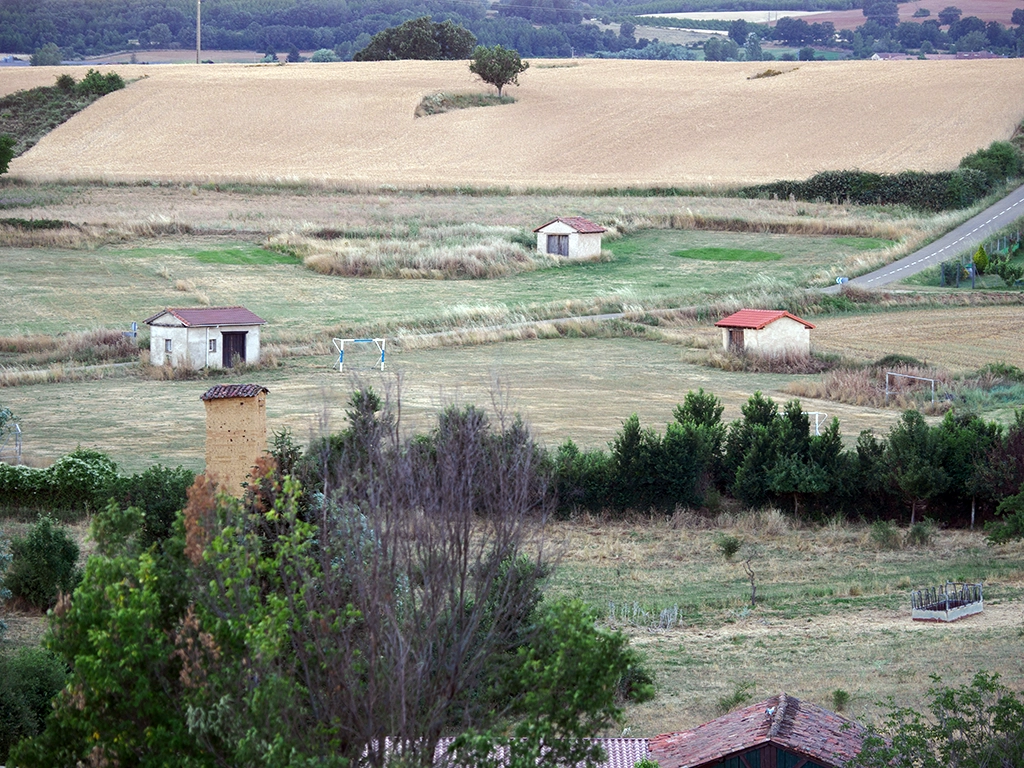
Solanilla is one of those villages that require neither explanation nor introduction, only a pause, a slower glance, and an ear attuned to what is not said but still insists.
Solanilla is one of those villages that require neither explanation nor introduction, only a pause, a slower glance, and an ear attuned to what is not said but still insists.
Documented since the 11th century through sales, donations, and royal privileges, it was a place of passage and inheritance, with a modest agricultural economy—yes—but also a stubborn one, marked by the quiet persistence of those who see themselves as part of a landscape, not a statistic.

Here, history does not arrive in floods but in minutiae: a plot sold for three brindled cows, a document signed in dark ink by Count Pedro Flaín and Doña Bronildi, their names nearly erased by time. In 1076, a certain Pelayo Petriz left several properties to his wife Velasquita, including “in the Porma, Solanella in Sobrerriba,” as if simply naming the place ensured its continued existence.
Then came the kings: Alfonso VI in 1152, donating land in Solanilla; Alfonso VII the following year, granting privileges to Archpriest Pedro and his brothers for their estates in Villamoros, Villacil, and Solanilla; and Alfonso IX in 1229, confirming what had already been given, exempting from taxes what was owned “in Solanela.” These are mere documents, perhaps—but not falsehoods. They are the most enduring form the past can take. And Solanilla, indeed, has belonged to many: to the cathedral chapter, the nobility, the Church, and at times to no one. In 1309, Juan Pérez sold five fields here. In 1393, the archdeacon of León auctioned the village’s rents for 400 maravedís to fund Masses in the chapel of San Andrés. And in the mid-18th century, the Marqués de la Ensenada’s census recorded thirteen neighbors and four widows, two dovecotes, twelve beehives, and day laborers who earned two reales a day—without food.
Today, little of that remains, yet the essential survives. The church, with its whitewashed walls, a modest belfry, and a cemetery separated more by terrain than intention, preserves the memory not only of the Virgin but of Saint Stephen as well, the village’s patron, present in two Baroque statues: one holding the martyr’s palm, the other more withdrawn, as if wishing to go unnoticed. On one side wall, a Gothic crucified Christ stands without display or tragic gesture, crucified simply, as if he knew that suffering does not need to shout to be real. Opposite the door, a humble Holy Week monument guards the entrance, and within, a Baroque altarpiece welcomes without dazzling. Saint Joseph, notably without the Child, seems to say that even incomplete figures can still accompany us. The miraculous here is not in what is seen, but in what continues to be spoken of.
And the most often spoken tale is this: that the Virgin—Our Lady of the Rutiellas, a polychrome wooden sculpture only eighty-eight centimeters tall, a fusion of styles and centuries, neither fully Romanesque nor entirely Gothic—disappeared one day without explanation and, after many months, returned just as silently, found by children amid the ruins of an overgrown monastery. No one knows which monastery, nor how she came back. Only that she did. And that, in some places, matters more than understanding. Since then, in Solanilla, images are no longer spoken of as objects. The Virgin is not venerated for her form, but for her return. Later moved to the Cathedral Museum in León, where she remains, perhaps safer but certainly farther, she lingers in the collective memory. For there are houses that protect but do not welcome, and villages that—though lacking the image—preserve her better than any museum.
Solanilla is still there. Not entirely present, not entirely forgotten. A place that no longer demands to be discovered, because it revealed itself centuries ago, when a name and a parcel of land were enough to declare a life. It now lives in the margins—between the paths descending to Secos and those climbing to Carbajosa; between what the Virgin left behind upon her return and what she never meant to take. And there it remains. Like a story that, even if no one tells it, still lives on.
Documented since the 11th century through sales, donations, and royal privileges, it was a place of passage and inheritance, with a modest agricultural economy—yes—but also a stubborn one, marked by the quiet persistence of those who see themselves as part of a landscape, not a statistic.
Here, history does not arrive in floods but in minutiae: a plot sold for three brindled cows, a document signed in dark ink by Count Pedro Flaín and Doña Bronildi, their names nearly erased by time. In 1076, a certain Pelayo Petriz left several properties to his wife Velasquita, including “in the Porma, Solanella in Sobrerriba,” as if simply naming the place ensured its continued existence.
Then came the kings: Alfonso VI in 1152, donating land in Solanilla; Alfonso VII the following year, granting privileges to Archpriest Pedro and his brothers for their estates in Villamoros, Villacil, and Solanilla; and Alfonso IX in 1229, confirming what had already been given, exempting from taxes what was owned “in Solanela.” These are mere documents, perhaps—but not falsehoods. They are the most enduring form the past can take. And Solanilla, indeed, has belonged to many: to the cathedral chapter, the nobility, the Church, and at times to no one. In 1309, Juan Pérez sold five fields here. In 1393, the archdeacon of León auctioned the village’s rents for 400 maravedís to fund Masses in the chapel of San Andrés. And in the mid-18th century, the Marqués de la Ensenada’s census recorded thirteen neighbors and four widows, two dovecotes, twelve beehives, and day laborers who earned two reales a day—without food.
Today, little of that remains, yet the essential survives. The church, with its whitewashed walls, a modest belfry, and a cemetery separated more by terrain than intention, preserves the memory not only of the Virgin but of Saint Stephen as well, the village’s patron, present in two Baroque statues: one holding the martyr’s palm, the other more withdrawn, as if wishing to go unnoticed. On one side wall, a Gothic crucified Christ stands without display or tragic gesture, crucified simply, as if he knew that suffering does not need to shout to be real. Opposite the door, a humble Holy Week monument guards the entrance, and within, a Baroque altarpiece welcomes without dazzling. Saint Joseph, notably without the Child, seems to say that even incomplete figures can still accompany us. The miraculous here is not in what is seen, but in what continues to be spoken of.
And the most often spoken tale is this: that the Virgin—Our Lady of the Rutiellas, a polychrome wooden sculpture only eighty-eight centimeters tall, a fusion of styles and centuries, neither fully Romanesque nor entirely Gothic—disappeared one day without explanation and, after many months, returned just as silently, found by children amid the ruins of an overgrown monastery. No one knows which monastery, nor how she came back. Only that she did. And that, in some places, matters more than understanding. Since then, in Solanilla, images are no longer spoken of as objects. The Virgin is not venerated for her form, but for her return. Later moved to the Cathedral Museum in León, where she remains, perhaps safer but certainly farther, she lingers in the collective memory. For there are houses that protect but do not welcome, and villages that—though lacking the image—preserve her better than any museum.
Solanilla is still there. Not entirely present, not entirely forgotten. A place that no longer demands to be discovered, because it revealed itself centuries ago, when a name and a parcel of land were enough to declare a life. It now lives in the margins—between the paths descending to Secos and those climbing to Carbajosa; between what the Virgin left behind upon her return and what she never meant to take. And there it remains. Like a story that, even if no one tells it, still lives on.

Discover Sobrarriba through an unforgettable journey through its heritage, culture and landscapes. The Sobrarriba Cultural Route offers guided tours and detailed explanations at various points of interest, combining history, architecture, traditions and nature in a unique experience.
Each route is designed to suit different types of travellers: from walkers and cyclists to those who prefer horse riding or even hot air ballooning. Join us on a journey through time and delve into the secrets of a land that has witnessed centuries of history.

Discover Sobrarriba through an unforgettable journey through its heritage, culture and landscapes. The Sobrarriba Cultural Route offers guided tours and detailed explanations at various points of interest, combining history, architecture, traditions and nature in a unique experience.
Each route is designed to suit different types of travellers: from walkers and cyclists to those who prefer horse riding or even hot air ballooning. Join us on a journey through time and delve into the secrets of a land that has witnessed centuries of history.