Play
Pause

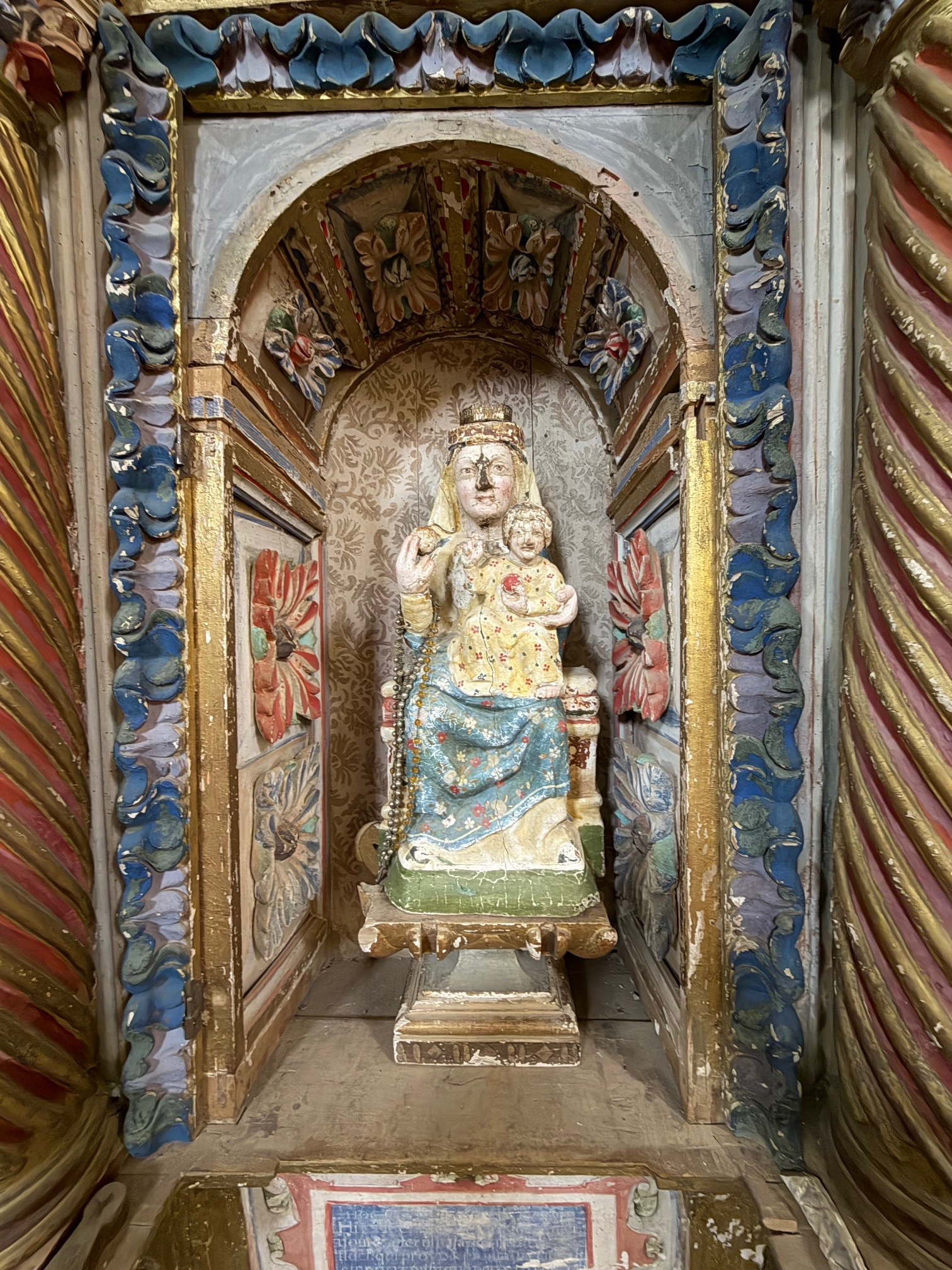
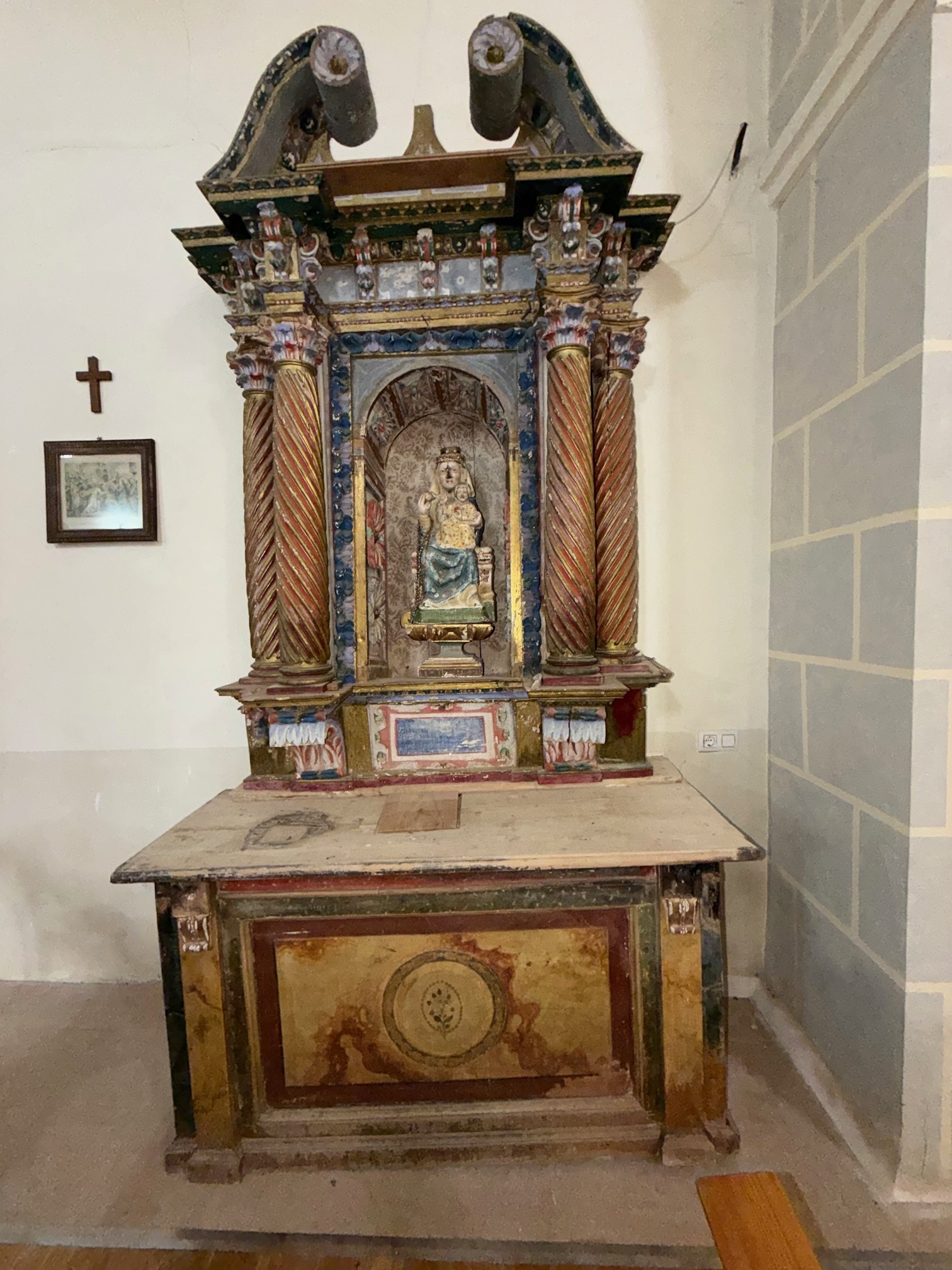
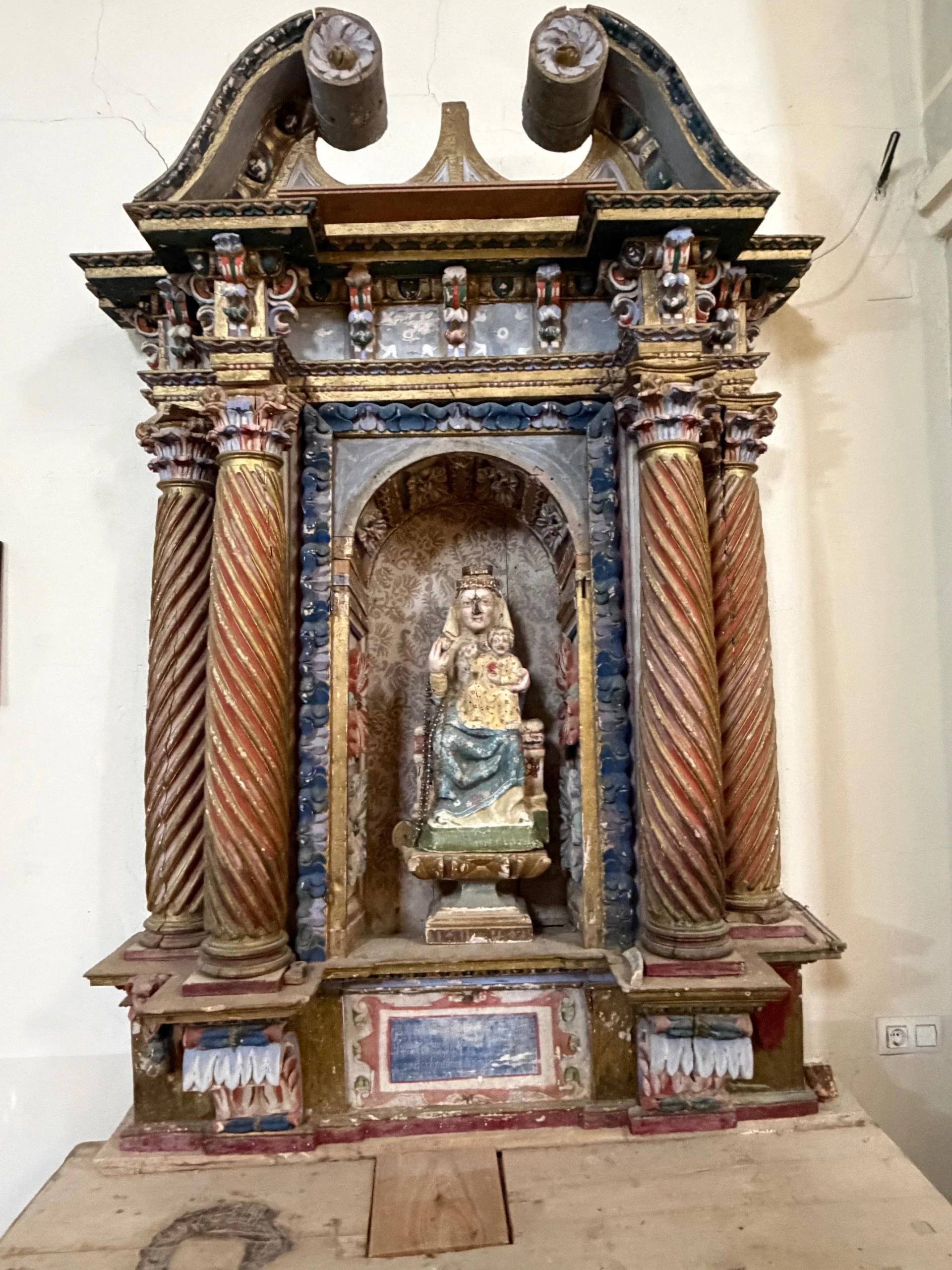
This Virgin, 60 cm tall and created in the 13th century, reflects the aesthetic of its time only through its sculptural form, as the polychromy it currently displays is likely from the 19th century.
Esta Virgen, de 60cm de altura, creada en el siglo XIII, solo responde en su bulto escultórico, a la estética propia de su momento creativo, ya que la policromía que hoy exhibe probablemente sea del siglo XIX.
It has a striking presence that, although already within the Gothic period, recalls the Romanesque through its compactness and monolithic nature. However, there are signs of a move toward naturalism in the detail of showing only one of the Child’s feet, while the other is covered by the tunic—its volume slightly higher and misaligned with the visible foot, corresponding to the higher position of the knee. The Child exhibits a contained attempt at movement and is shifted toward the Mother’s left leg, which holds and integrates him into her own volume. The folds are thick, fluid, and casual, even asymmetrical, as seen in the Virgin’s mantle beneath the crown. Both figures hold an orb, but the Mother does so with such poise and naturalness—evident in the individual shaping and bending of the fingers—that it reflects an intent toward naturalism.

The solidity of the throne is striking, significantly exceeding the volume of the figure. We do not know what kind of original decoration it had, as it is hidden beneath successive layers of repainting.
Despite the evidence of multiple interventions, the image today presents significant damage that warrants its removal from active worship, exposing it to conservation risks. A notable loss on the Virgin’s face and a crack running from bottom to top justify this concern.
This image—perhaps due to its small size and charm—has a natural appeal that explains the efforts of devotees to keep it in use, applying the transformations and repainting now visible. It is a bearer of an ancestral devotion that has successfully endured to the present day.
It has a striking presence that, although already within the Gothic period, recalls the Romanesque through its compactness and monolithic nature. However, there are signs of a move toward naturalism in the detail of showing only one of the Child’s feet, while the other is covered by the tunic—its volume slightly higher and misaligned with the visible foot, corresponding to the higher position of the knee. The Child exhibits a contained attempt at movement and is shifted toward the Mother’s left leg, which holds and integrates him into her own volume. The folds are thick, fluid, and casual, even asymmetrical, as seen in the Virgin’s mantle beneath the crown. Both figures hold an orb, but the Mother does so with such poise and naturalness—evident in the individual shaping and bending of the fingers—that it reflects an intent toward naturalism.
It has a striking presence that, although already within the Gothic period, recalls the Romanesque through its compactness and monolithic nature. However, there are signs of a move toward naturalism in the detail of showing only one of the Child’s feet, while the other is covered by the tunic—its volume slightly higher and misaligned with the visible foot, corresponding to the higher position of the knee. The Child exhibits a contained attempt at movement and is shifted toward the Mother’s left leg, which holds and integrates him into her own volume. The folds are thick, fluid, and casual, even asymmetrical, as seen in the Virgin’s mantle beneath the crown. Both figures hold an orb, but the Mother does so with such poise and naturalness—evident in the individual shaping and bending of the fingers—that it reflects an intent toward naturalism.
The solidity of the throne is striking, significantly exceeding the volume of the figure. We do not know what kind of original decoration it had, as it is hidden beneath successive layers of repainting.
Despite the evidence of multiple interventions, the image today presents significant damage that warrants its removal from active worship, exposing it to conservation risks. A notable loss on the Virgin’s face and a crack running from bottom to top justify this concern.
This image—perhaps due to its small size and charm—has a natural appeal that explains the efforts of devotees to keep it in use, applying the transformations and repainting now visible. It is a bearer of an ancestral devotion that has successfully endured to the present day.

Descubre la Sobarriba a través de un recorrido inolvidable por su patrimonio, cultura y paisajes. La Ruta Cultural de la Sobrarriba ofrece visitas guiadas y explicaciones detalladas en varios puntos de interés, combinando historia, arquitectura, tradiciones y naturaleza en una experiencia única.
Cada ruta está diseñada para adaptarse a diferentes tipos de viajeros: desde caminantes y ciclistas hasta quienes prefieren rutas a caballo o incluso en globo aerostático. Acompáñanos en un viaje en el tiempo y adéntrate en los secretos de una tierra que ha sido testigo de siglos de historia.

Descubre la Sobarriba a través de un recorrido inolvidable por su patrimonio, cultura y paisajes. La Ruta Cultural de la Sobrarriba ofrece visitas guiadas y explicaciones detalladas en varios puntos de interés, combinando historia, arquitectura, tradiciones y naturaleza en una experiencia única.
Cada ruta está diseñada para adaptarse a diferentes tipos de viajeros: desde caminantes y ciclistas hasta quienes prefieren rutas a caballo o incluso en globo aerostático. Acompáñanos en un viaje en el tiempo y adéntrate en los secretos de una tierra que ha sido testigo de siglos de historia.