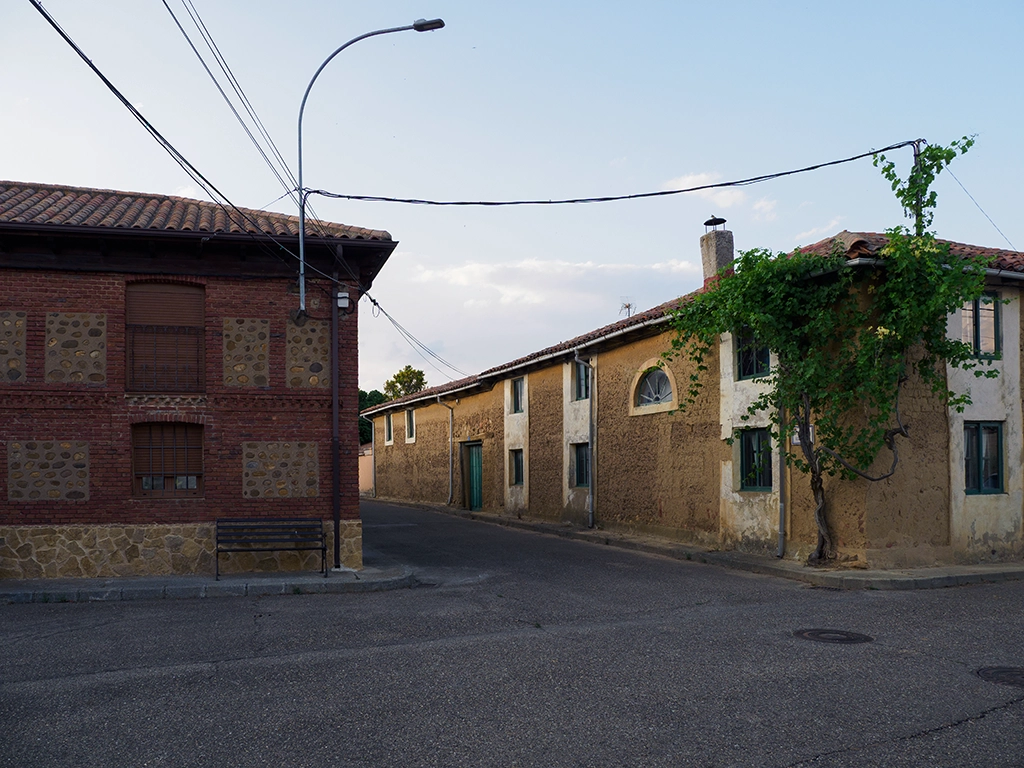
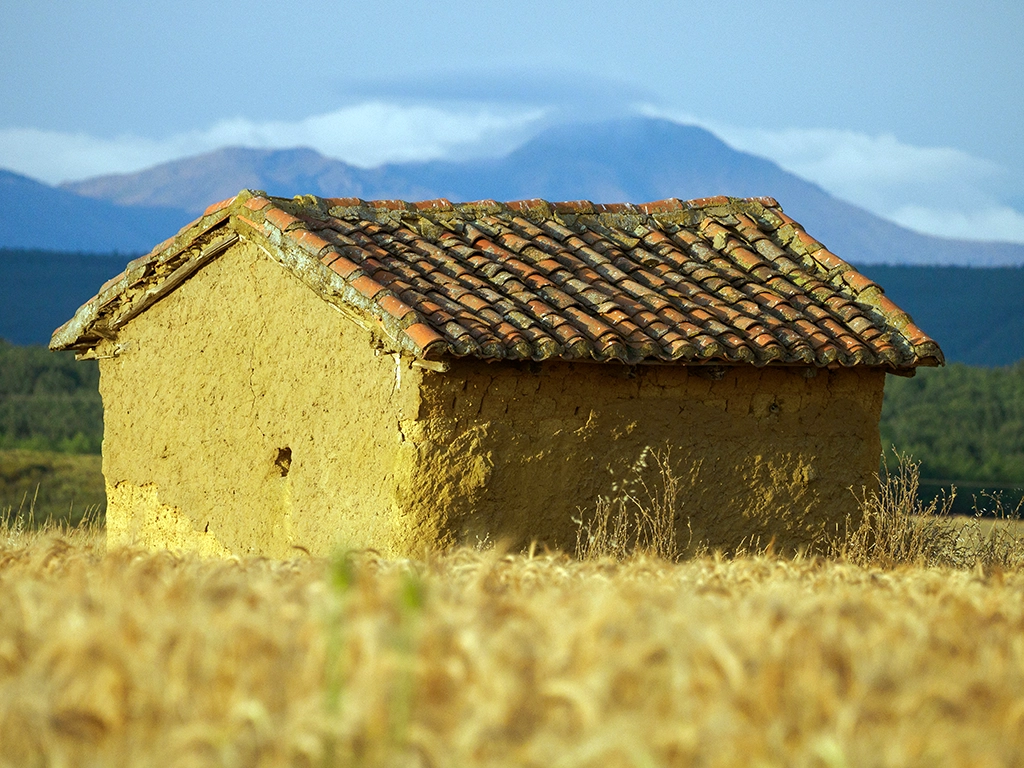
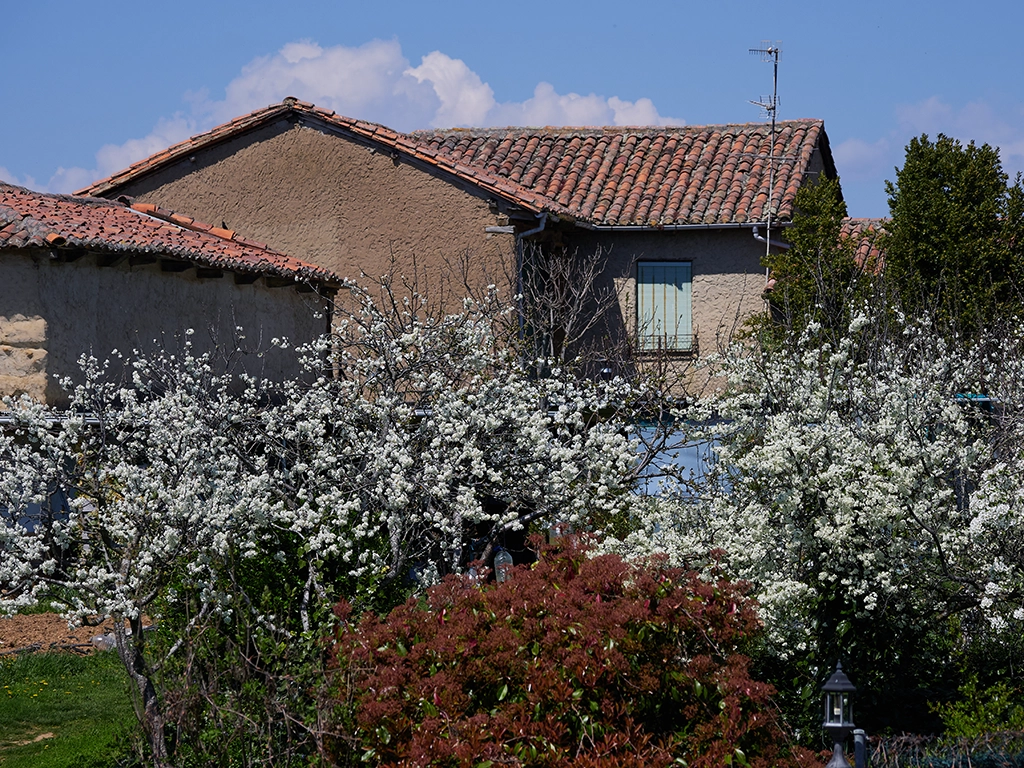
Documented since the 10th century—though under various names—Villacil has witnessed donations, legal disputes, and communal life. In 1120, its own inhabitants handed over their church to Santa María de León. In 1753, the land survey of the Marqués de la Ensenada recorded its modest agricultural economy, and in 1835, Madoz confirmed its quiet persistence.
Documented since the 10th century—though under various names—Villacil has witnessed donations, legal disputes, and communal life. In 1120, its own inhabitants handed over their church to Santa María de León. In 1753, the land survey of the Marqués de la Ensenada recorded its modest agricultural economy, and in 1835, Madoz confirmed its quiet persistence.
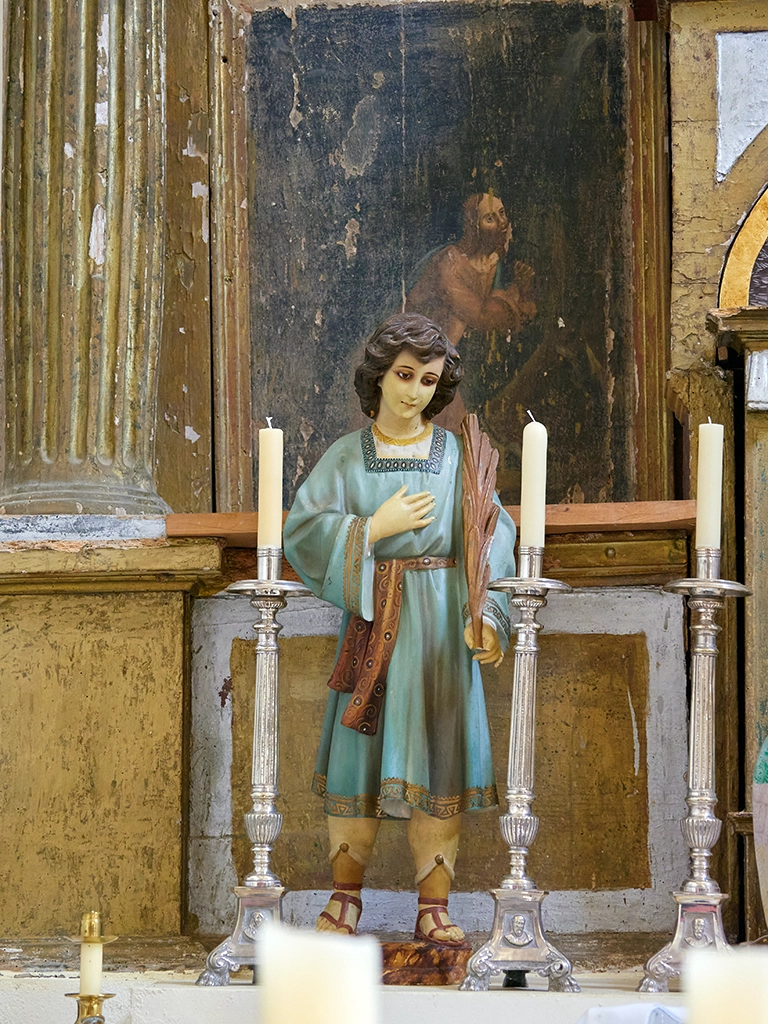
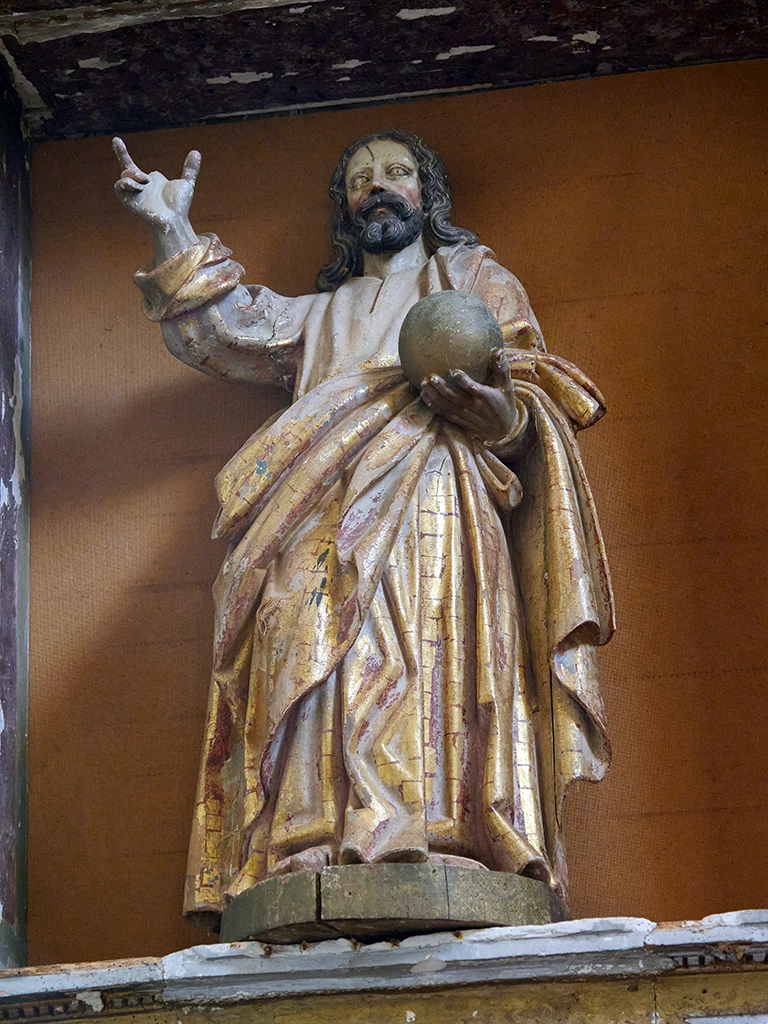
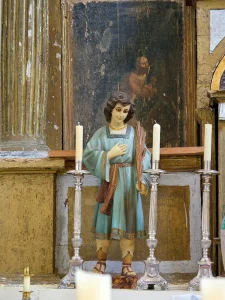
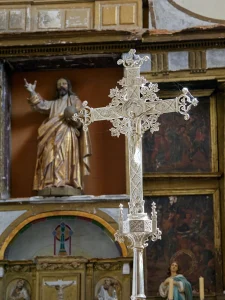
Sometimes it is a single image that seems out of place, and yet says more than all the others. In Villacil, a place that goes unnamed unless it is known, there is a figure that unsettles. It is neither the oldest nor the best preserved, nor even the most venerated. But it is there. A teenage Jesus—not the Divine Child nor the adult Christ of the Passion, but something in between—holds the globe in his left hand and raises his right in blessing, as if not quite sure yet what to do with so much power. His face is out of proportion, his expression almost mischievous. There’s something irreverent in his stance, as if he had not yet resigned himself to being fully divine. It is, perhaps unintentionally, the most human image in the temple. The most imperfect. The most alive.

From that gesture, one begins to understand what Villacil holds—or better said, preserves. It does so without fanfare or monumentality. Its church—discreet like all things in La Sobarriba—is a space where the sacred does not impose; it simply is. And remains, like a field no longer cultivated but not quite abandoned either.
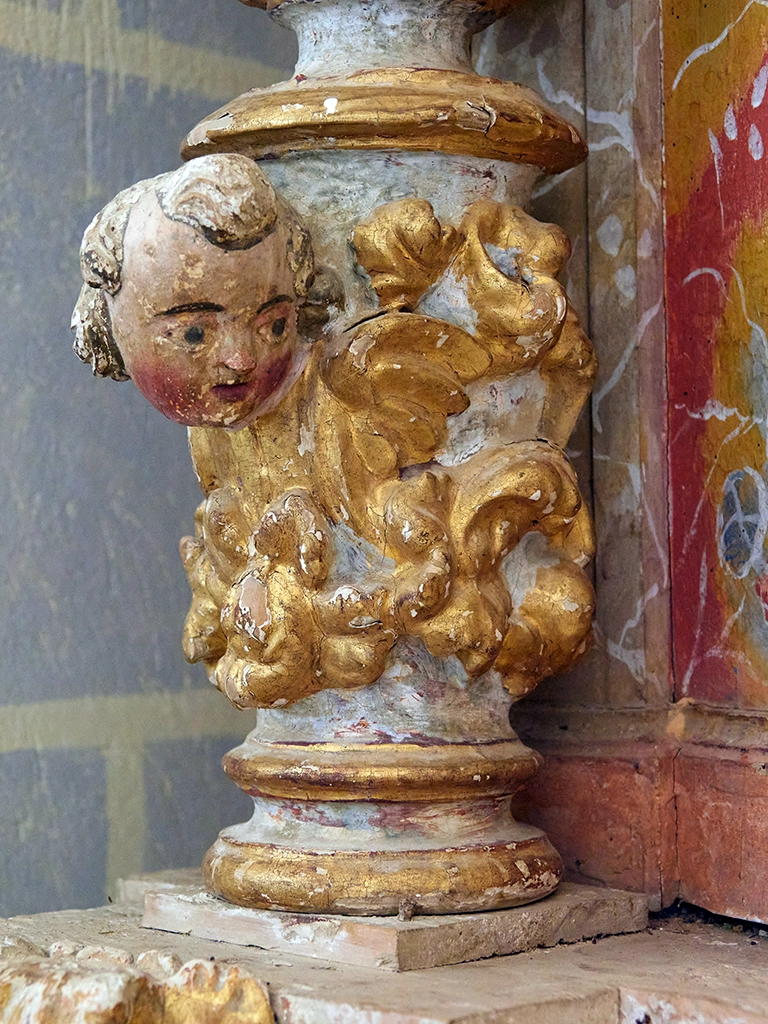
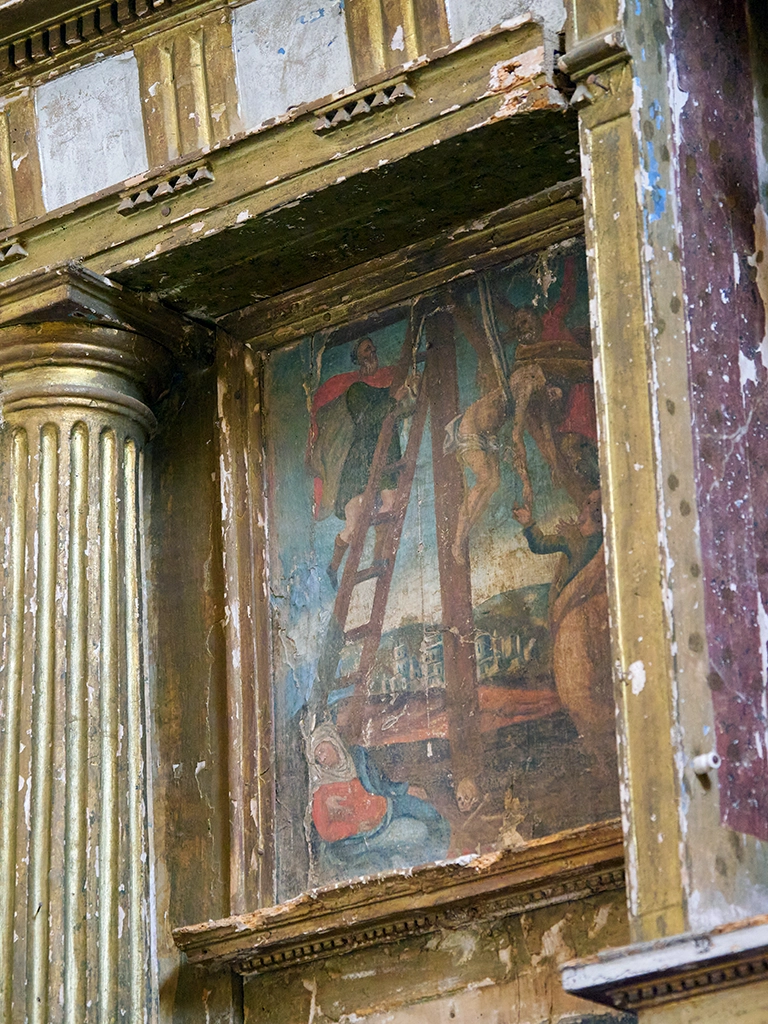
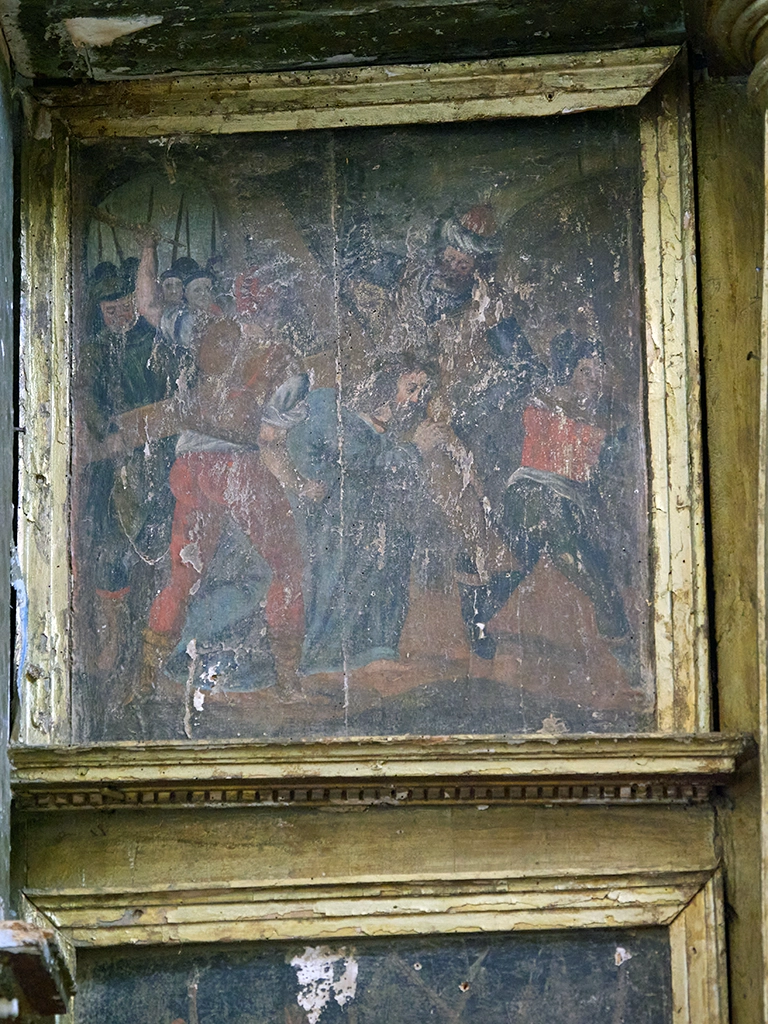
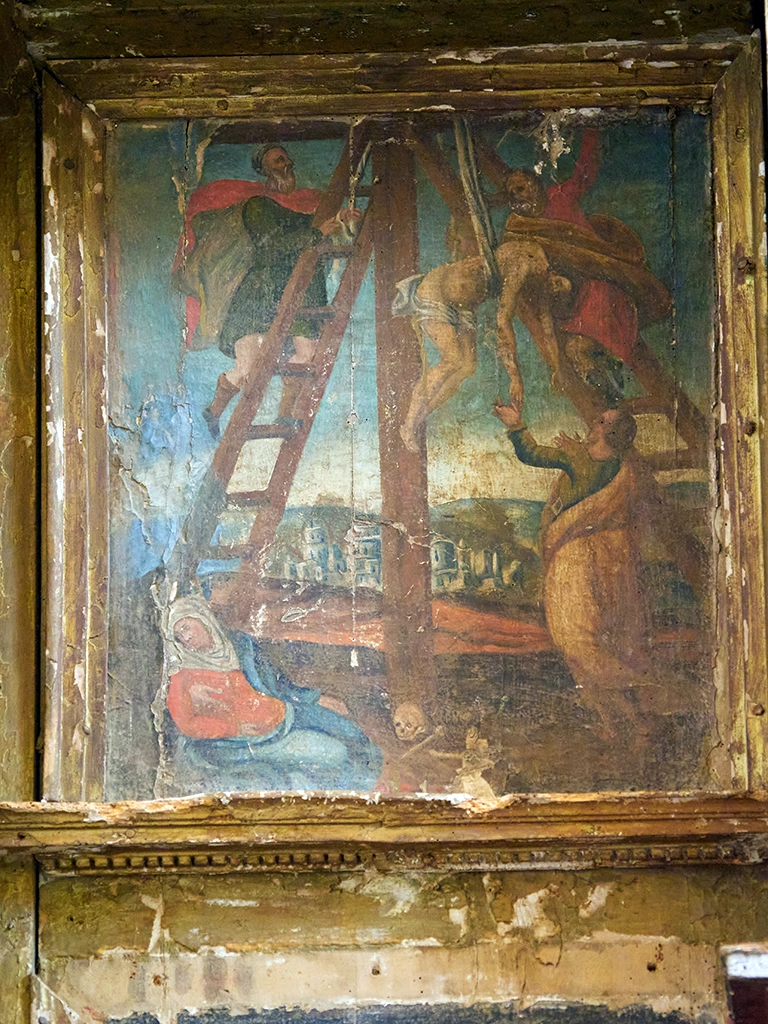
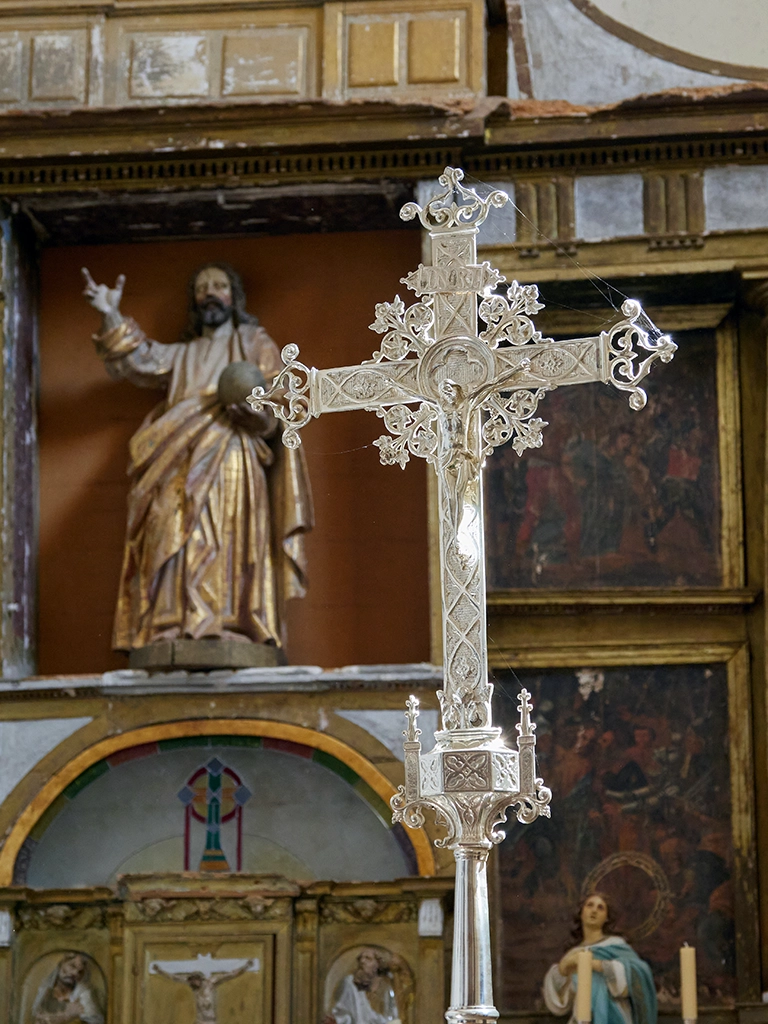
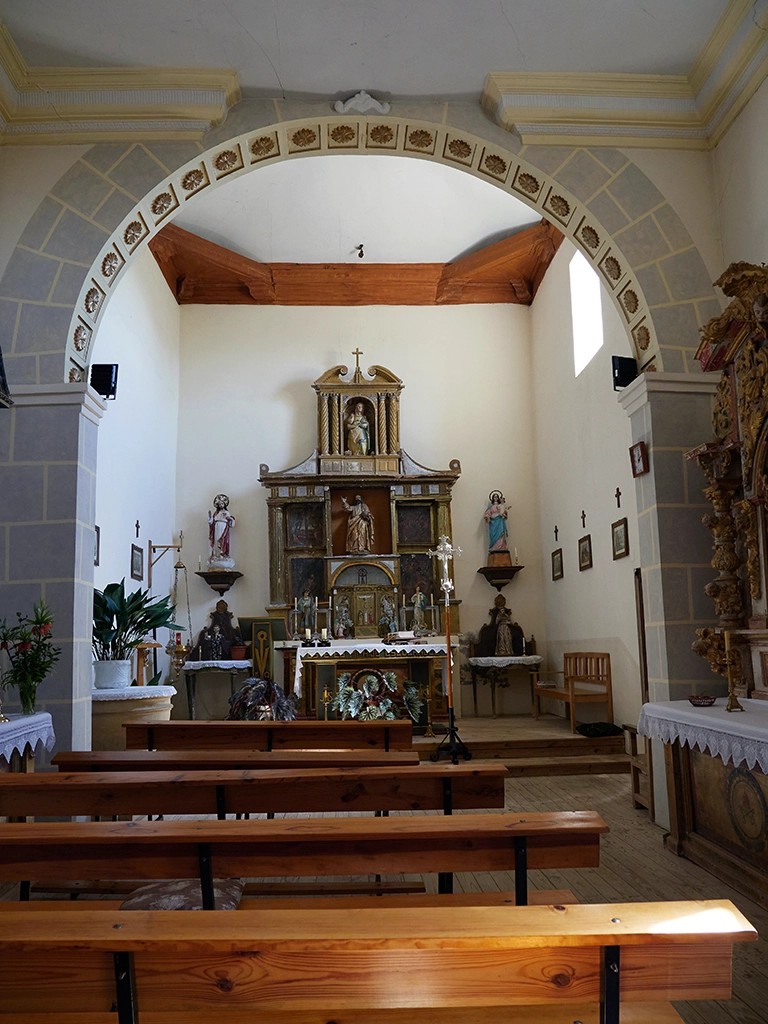
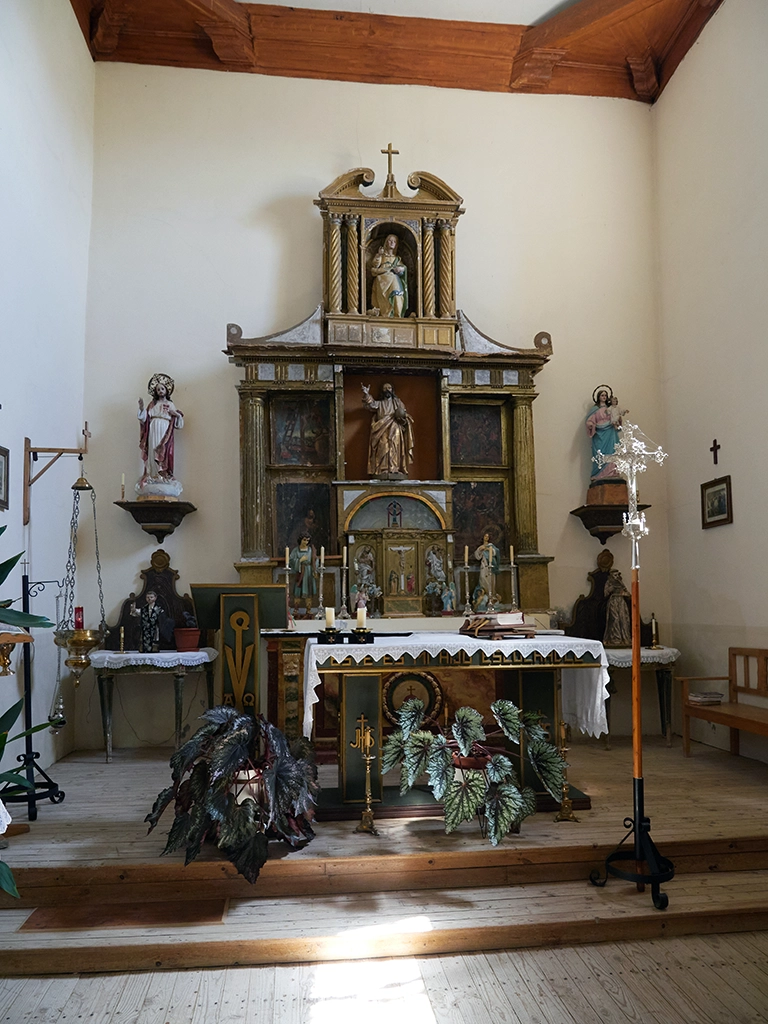
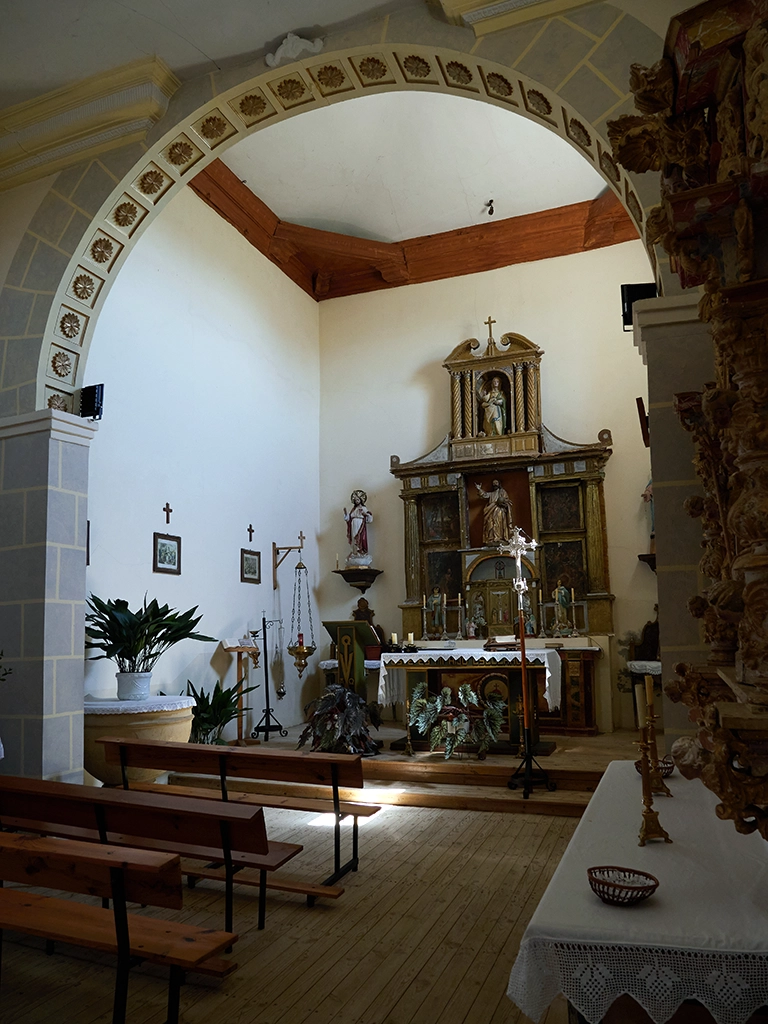
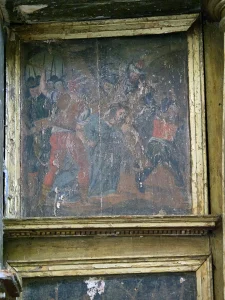
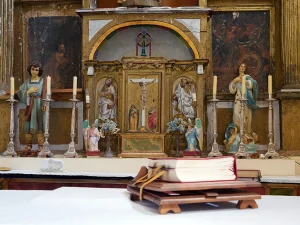
The main altar holds a Renaissance altarpiece whose painted panels survive with a wounded dignity. They depict scenes from the Passion: the garden, the kiss, the fall, the descent. The paint is damaged, and yet, in its fragility, there is an eloquence that perfect works do not always achieve. At the center, a Savior with remnants of gold decoration still presides. Below him, a polychrome tabernacle, with a Calvary scene flanked by Saints Peter and Paul, has been clumsily repainted, as though the attempt to restore it wished to save it without understanding it. The result is a varnish that hides more than it reveals.
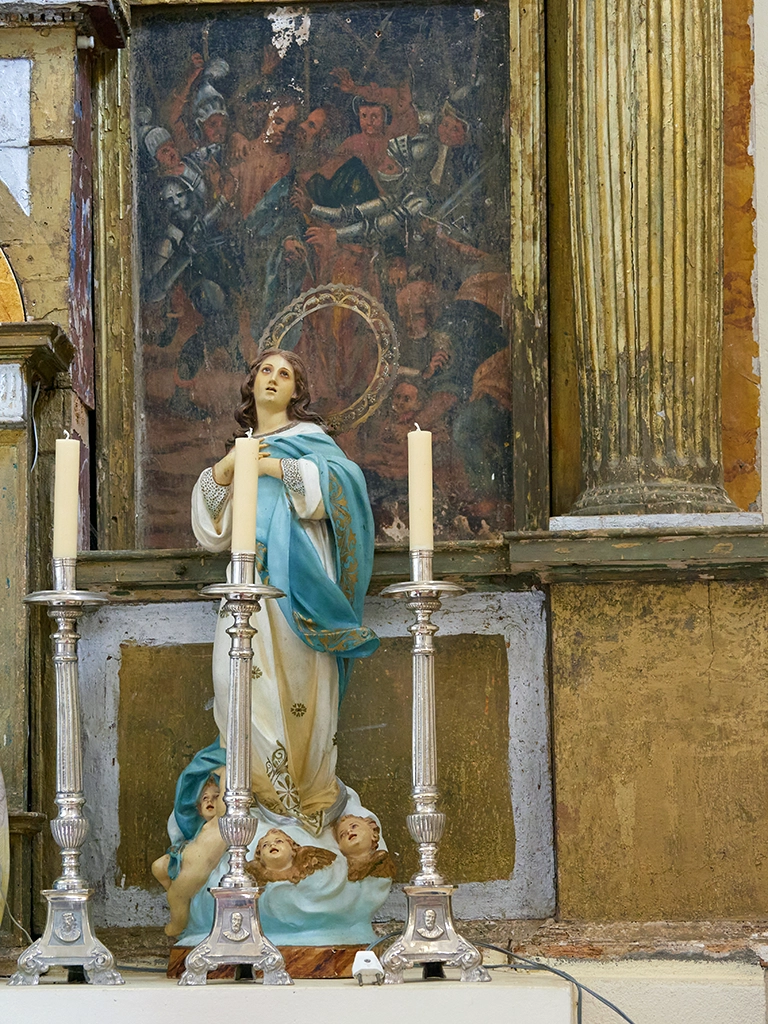
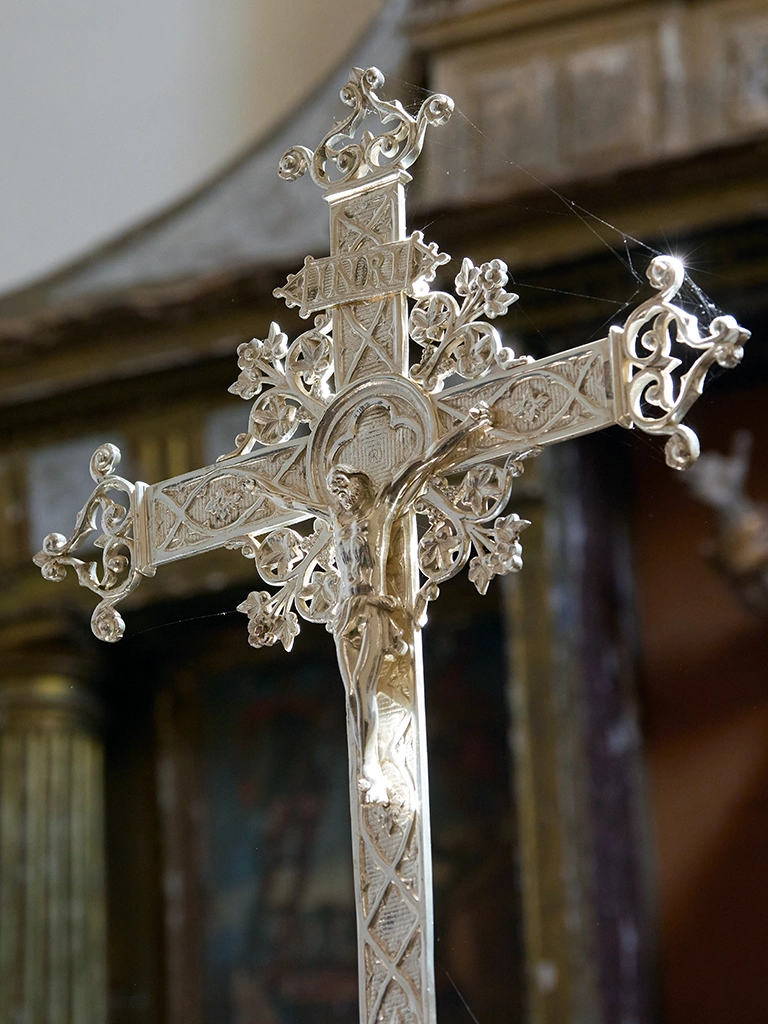
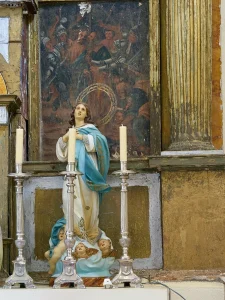
Higher up, like an echo of heaven, the attic level holds a small Virgin in a niche, while the ceiling still shows fragments of the original Mudejar coffered ceiling, likely from the 15th century, when such ornamentation was a silent expression of Morisco memory. Fragments remain—beams, perhaps names that no one remembers anymore. Among them, the garrocha of the Holy Thursday monument, that old rod that once bore the weight of Easter liturgy. It may seem insignificant today, but once it upheld the town’s solemnity.
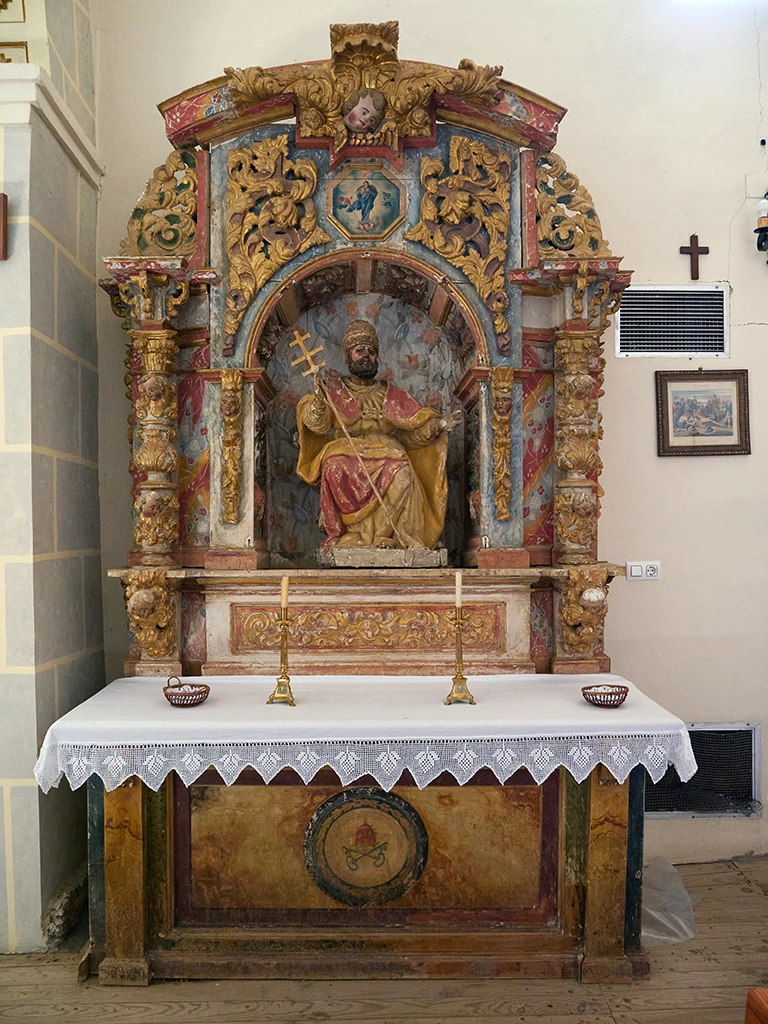
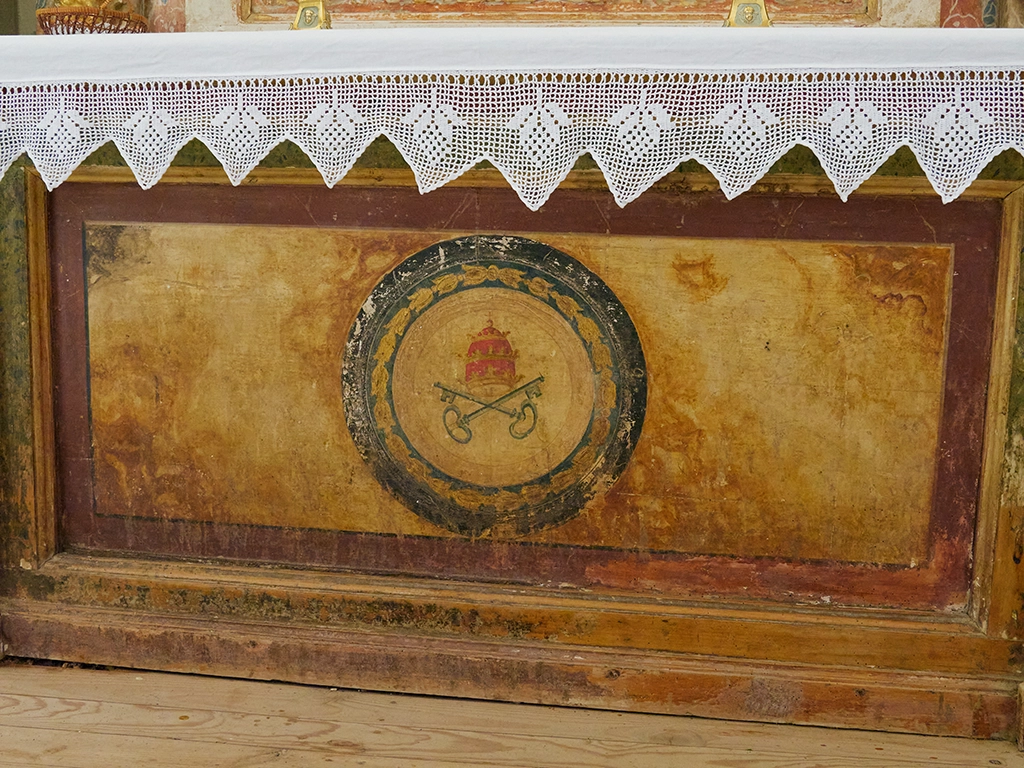
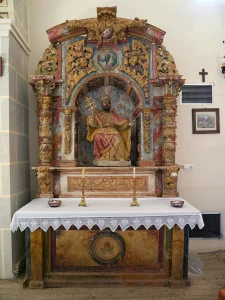
Across from that altarpiece, on a side wall, Saint Peter in Chains keeps watch, still shackled, in a Baroque structure more robust than beautiful. His presence is stern, and though his polychrome is faded, it still lends light to the apostle’s motionless gesture. Nearby, on one of those Rococo tables that abound throughout the region, stands a simple Saint Anthony—rough in form but sincere in spirit—smiling without a smile. It is the kind of sculpture one prays to without admiring, but remembers after leaving.
And then, almost unintentionally, one ends up before the Gothic Virgin from the late 13th century, housed in a glass niche, as if the glass could protect her from time. Barely sixty centimeters tall, carved in polychrome wood, she still bears something of the Romanesque: rigidity, severity, hieratic grace. But there is also gentleness in her throne, and solemnity in her silence. Her small altarpiece, with fluted columns and Corinthian capitals, gives her the setting that history denied her. Here, she does not preside; she accompanies. She is a mother who no longer expects to be seen, but never ceases to be present.
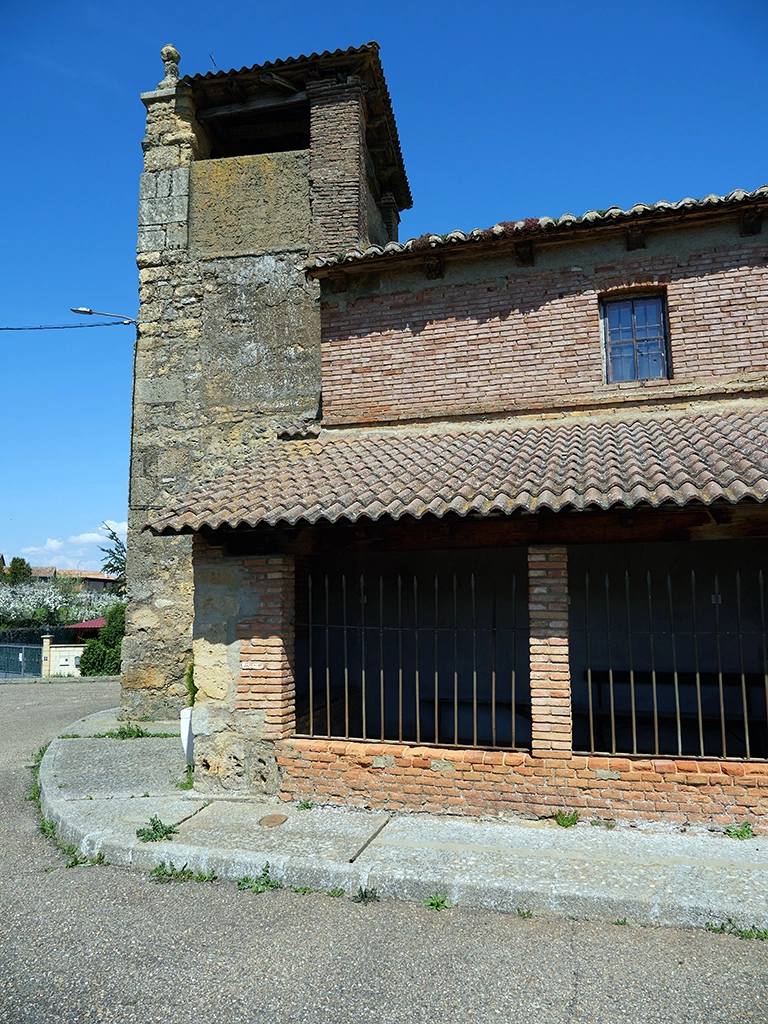
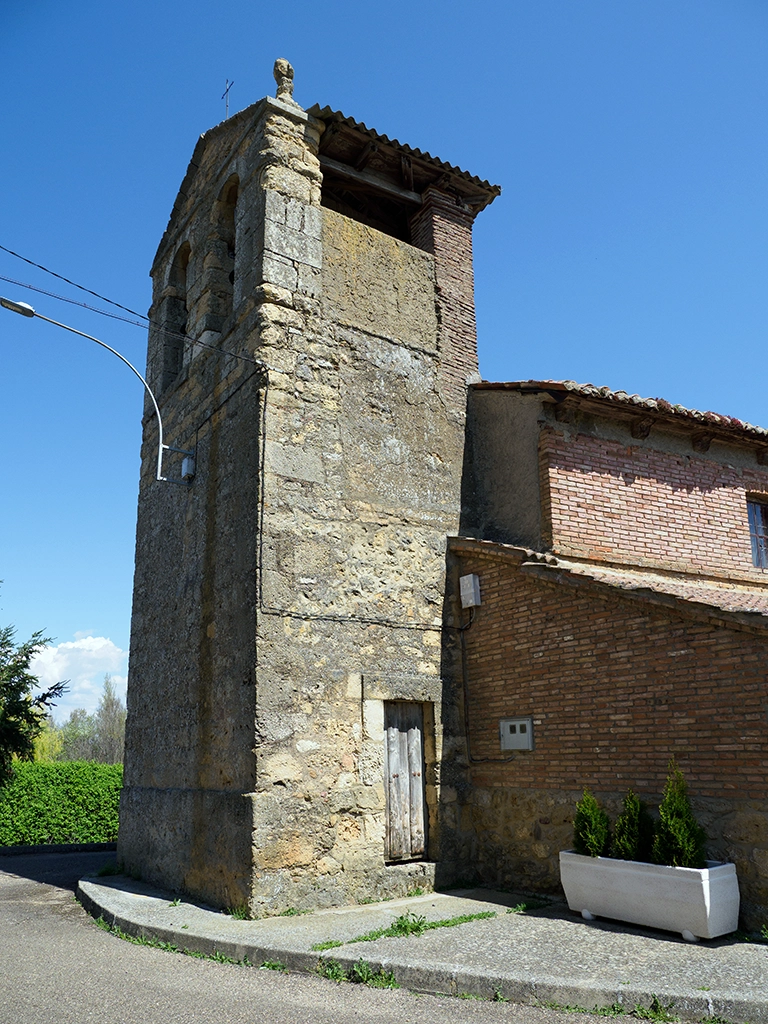
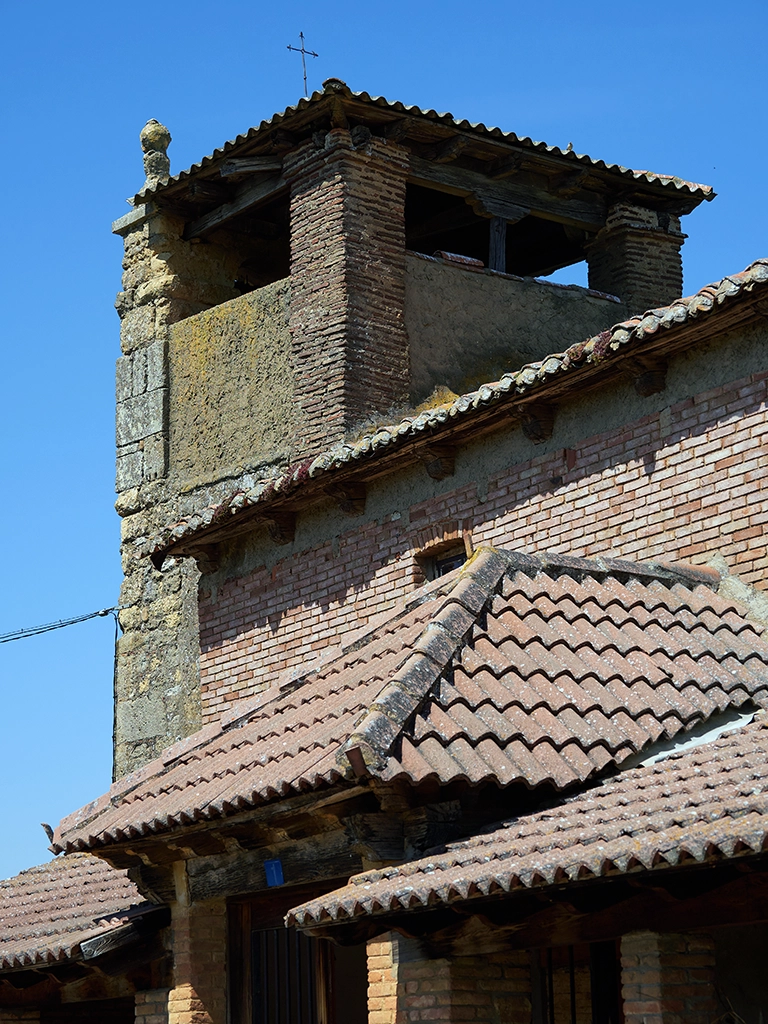


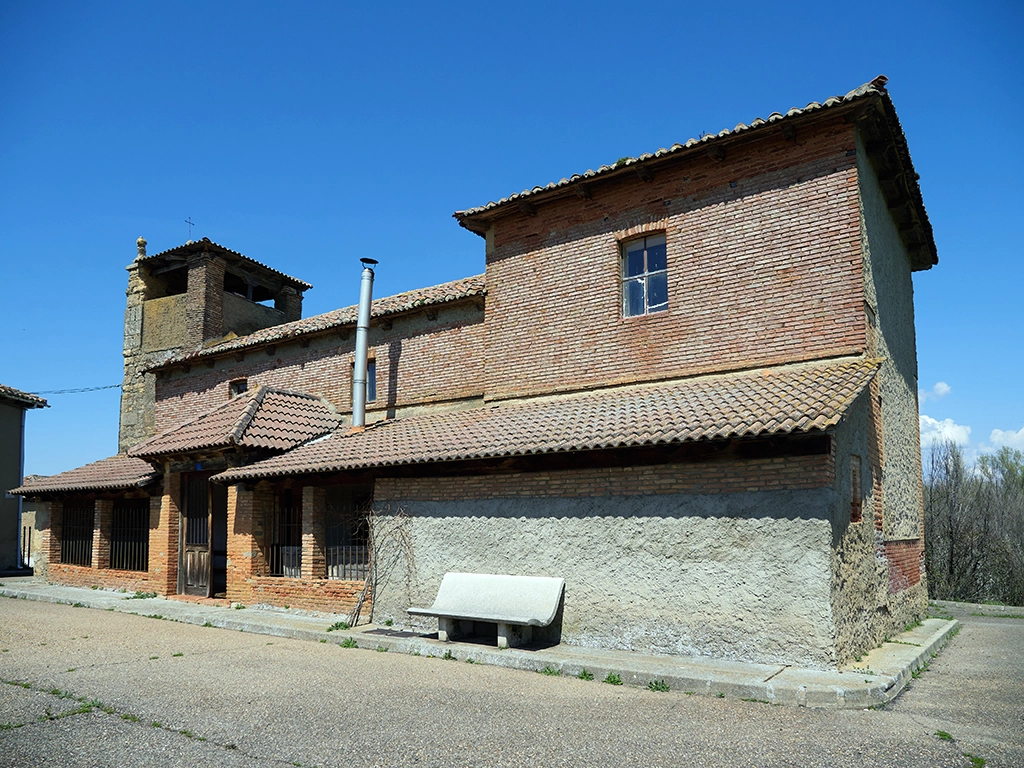

Villacil does not always appear in the documents as one might expect. Over the centuries, it is mentioned as “Villa Eziti,” “Villa Ceid,” “Villa Cidi,” or “Villa Ablacet”—names that have led to more than one misidentification. Yet some texts offer solid anchors: in 984, King Vermudo II includes Villacil in a donation along with Paradilla and Villa Gatón, confirming its existence among the lands watered by the Fonte Genestales. And in 1116, Diego, Bishop of León, recognizes a clerical share in Villacete—a name that, in all likelihood, already refers to this village in La Sobarriba.
In 1120, ten neighbors—Petrus Cristofoliz, Martinus Petriz, Froila Domenquiz, and others whose surnames still seem to echo across the fields—donated to the Church of Santa María de León the small parish they themselves had built on their own land. This was no small gesture: it was the act of a community that saw itself as part of something larger. That gave what was theirs because they believed it to be shared.
And if we add to this what the Catastro del Marqués de la Ensenada recorded in 1753 and 1754—the dovecotes, the weavers, the 8 households and their yields, the tithes received by the Cathedral of León—we understand that Villacil has not just been a name, but a living organism, breathing through the centuries at its own pace. In 1835, Madoz portrays it as a humble village of barely 7 houses and 29 souls, annexed to Arcahueja, nestled in a quiet valley where livestock is still raised and prayers are still whispered without pride.
All of this—the spoken and the unspoken—composes in Villacil an inventory of faith that does not seek to impose. Not by style, nor by wealth, nor by uniqueness. Only by endurance. Here, the sacred does not shine—it resists. Like water in a well, or a root beneath the soil. Like the image of a teenage God who has not yet learned how to be one.
Sometimes it is a single image that seems out of place, and yet says more than all the others. In Villacil, a place that goes unnamed unless it is known, there is a figure that unsettles. It is neither the oldest nor the best preserved, nor even the most venerated. But it is there. A teenage Jesus—not the Divine Child nor the adult Christ of the Passion, but something in between—holds the globe in his left hand and raises his right in blessing, as if not quite sure yet what to do with so much power. His face is out of proportion, his expression almost mischievous. There’s something irreverent in his stance, as if he had not yet resigned himself to being fully divine. It is, perhaps unintentionally, the most human image in the temple. The most imperfect. The most alive.
From that gesture, one begins to understand what Villacil holds—or better said, preserves. It does so without fanfare or monumentality. Its church—discreet like all things in La Sobarriba—is a space where the sacred does not impose; it simply is. And remains, like a field no longer cultivated but not quite abandoned either.
The main altar holds a Renaissance altarpiece whose painted panels survive with a wounded dignity. They depict scenes from the Passion: the garden, the kiss, the fall, the descent. The paint is damaged, and yet, in its fragility, there is an eloquence that perfect works do not always achieve. At the center, a Savior with remnants of gold decoration still presides. Below him, a polychrome tabernacle, with a Calvary scene flanked by Saints Peter and Paul, has been clumsily repainted, as though the attempt to restore it wished to save it without understanding it. The result is a varnish that hides more than it reveals.
Higher up, like an echo of heaven, the attic level holds a small Virgin in a niche, while the ceiling still shows fragments of the original Mudejar coffered ceiling, likely from the 15th century, when such ornamentation was a silent expression of Morisco memory. Fragments remain—beams, perhaps names that no one remembers anymore. Among them, the garrocha of the Holy Thursday monument, that old rod that once bore the weight of Easter liturgy. It may seem insignificant today, but once it upheld the town’s solemnity.
Across from that altarpiece, on a side wall, Saint Peter in Chains keeps watch, still shackled, in a Baroque structure more robust than beautiful. His presence is stern, and though his polychrome is faded, it still lends light to the apostle’s motionless gesture. Nearby, on one of those Rococo tables that abound throughout the region, stands a simple Saint Anthony—rough in form but sincere in spirit—smiling without a smile. It is the kind of sculpture one prays to without admiring, but remembers after leaving.
And then, almost unintentionally, one ends up before the Gothic Virgin from the late 13th century, housed in a glass niche, as if the glass could protect her from time. Barely sixty centimeters tall, carved in polychrome wood, she still bears something of the Romanesque: rigidity, severity, hieratic grace. But there is also gentleness in her throne, and solemnity in her silence. Her small altarpiece, with fluted columns and Corinthian capitals, gives her the setting that history denied her. Here, she does not preside; she accompanies. She is a mother who no longer expects to be seen, but never ceases to be present.








Villacil does not always appear in the documents as one might expect. Over the centuries, it is mentioned as “Villa Eziti,” “Villa Ceid,” “Villa Cidi,” or “Villa Ablacet”—names that have led to more than one misidentification. Yet some texts offer solid anchors: in 984, King Vermudo II includes Villacil in a donation along with Paradilla and Villa Gatón, confirming its existence among the lands watered by the Fonte Genestales. And in 1116, Diego, Bishop of León, recognizes a clerical share in Villacete—a name that, in all likelihood, already refers to this village in La Sobarriba.
In 1120, ten neighbors—Petrus Cristofoliz, Martinus Petriz, Froila Domenquiz, and others whose surnames still seem to echo across the fields—donated to the Church of Santa María de León the small parish they themselves had built on their own land. This was no small gesture: it was the act of a community that saw itself as part of something larger. That gave what was theirs because they believed it to be shared.
And if we add to this what the Catastro del Marqués de la Ensenada recorded in 1753 and 1754—the dovecotes, the weavers, the 8 households and their yields, the tithes received by the Cathedral of León—we understand that Villacil has not just been a name, but a living organism, breathing through the centuries at its own pace. In 1835, Madoz portrays it as a humble village of barely 7 houses and 29 souls, annexed to Arcahueja, nestled in a quiet valley where livestock is still raised and prayers are still whispered without pride.
All of this—the spoken and the unspoken—composes in Villacil an inventory of faith that does not seek to impose. Not by style, nor by wealth, nor by uniqueness. Only by endurance. Here, the sacred does not shine—it resists. Like water in a well, or a root beneath the soil. Like the image of a teenage God who has not yet learned how to be one.

Discover Sobrarriba through an unforgettable journey through its heritage, culture and landscapes. The Sobrarriba Cultural Route offers guided tours and detailed explanations at various points of interest, combining history, architecture, traditions and nature in a unique experience.
Each route is designed to suit different types of travellers: from walkers and cyclists to those who prefer horse riding or even hot air ballooning. Join us on a journey through time and delve into the secrets of a land that has witnessed centuries of history.

Discover Sobrarriba through an unforgettable journey through its heritage, culture and landscapes. The Sobrarriba Cultural Route offers guided tours and detailed explanations at various points of interest, combining history, architecture, traditions and nature in a unique experience.
Each route is designed to suit different types of travellers: from walkers and cyclists to those who prefer horse riding or even hot air ballooning. Join us on a journey through time and delve into the secrets of a land that has witnessed centuries of history.