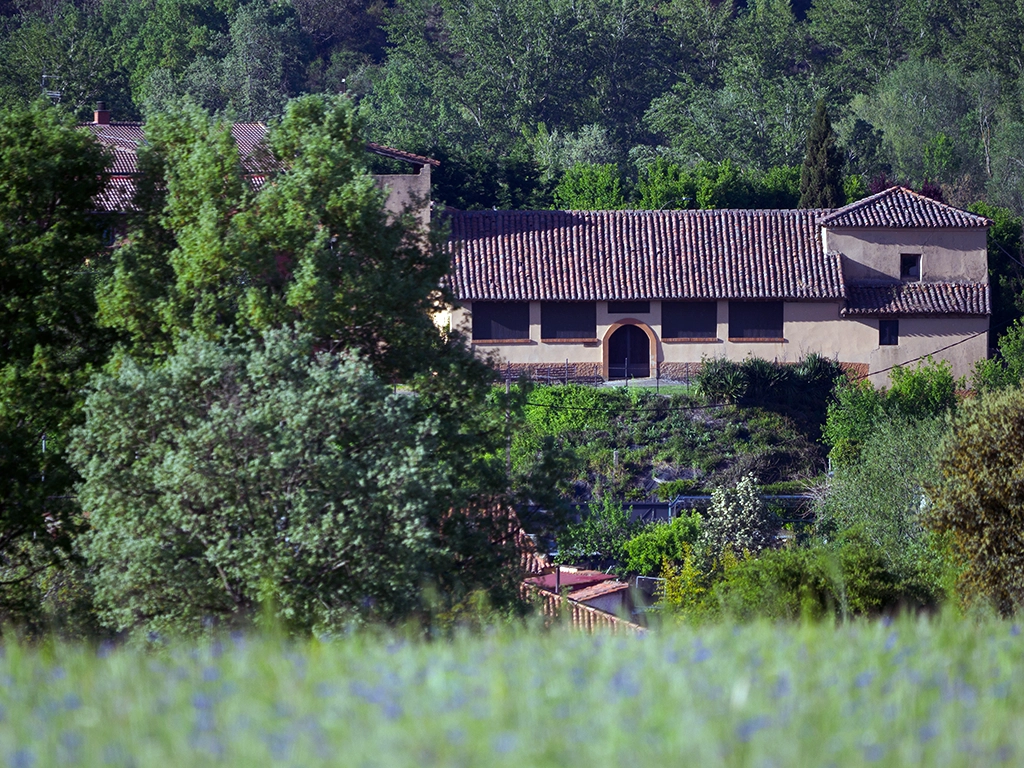
Santovenia del Monte, perched high above the Leonese plain, is one of those villages that do not seek attention, yet linger in memory for their quietness and discreet dignity. Its documented history dates back to the 12th century, with charters, donations, and testimonies that reveal a modest yet steadfast community.
Santovenia del Monte, perched high above the Leonese plain, is one of those villages that do not seek attention, yet linger in memory for their quietness and discreet dignity. Its documented history dates back to the 12th century, with charters, donations, and testimonies that reveal a modest yet steadfast community.
From up there—because Santovenia del Monte is not simply located, but rather seems suspended, as if the landscape did not fully embrace it but tolerated it grudgingly—one has the impression that everything else happens below, as though this place had always chosen, not so much isolation as observation. Some villages defend themselves with walls, others with distance; Santovenia has always seemed to defend itself with height. Not to dominate, but to watch without taking part, to say “I too exist” without the need to intervene.

As early as 1165, Menendo, abbot of San Isidoro de León, granted a charter to its inhabitants, ensuring them wheat bread, wine from San Facundo, and freedom to leave without tribute or imposed inheritance. That document—though never entirely explicit—appears to refer to this very place. It includes warnings and curses: that no one break the pact, on pain of being condemned alongside Judas in hell. Was Santovenia then a promise? A refuge under sacred word?
Later, in 1369, a canon named Juan Martínez de Raga donated houses in this village to the Chapter of León, and by 1396, the village’s revenues—lands, vineyards, meadows, mills—were administered by tenants who pledged loyalty in exchange for little: 70 maravedís, in a world where grain was currency and wine, testimony. Names like Pedro Texerina and Catalina Fernández appear among witnesses and litigants, revealing another truth: in Santovenia, all is humble, but nothing is indifferent.
The church, like so many in the region, stands out not for its size, its layout, or its bell tower, but for the way it inhabits its place: without imposition, without competing with the sky, without disturbing the landscape. Inside, a dimness that is not darkness but hospitality envelops the little that is shown. A Romanesque Virgin from the 13th century, just seventy-one centimeters tall, seated, hieratic, without tenderness or smile, holds her place with that unalterable dignity only truly ancient images possess. Maternity, in her, is not affection but fate. She does not look at the Child, nor at the faithful. She looks at time. And endures it.
Beside her, like old companions who no longer speak but cannot part, stand Saint Agatha, her breasts offered on a tray—a terrible symbol, yet free of false pity—and Saint John the Baptist, with the Lamb and the Gospel. They are overpainted, probably by well-meaning but clumsy hands. What elsewhere would be a loss, here seems another form of resistance: what is damaged also preserves, also endures.
And then there is him: Saint Roch, standing, gilded, carved and patterned, with his wound visible and his faithful dog licking it without drama. A baroque image, yes, but one that seeks not to dazzle, but to console. A saint of plagues and paths, of hospitality and scarcity, who here bears the face of a neighbor.
In the Catastro del Marqués de la Ensenada, compiled between 1753 and 1754, it is noted that Father Manuel de las Bacas received two-thirds of the tithes; that there were three dovecotes, a tile kiln worked by Joseph de Otero for four reales a day, and up to 102 beehives, twenty of which belonged to Domingo Morán, a resident of Villafeliz. Twenty-one households and three widows then made up the village, with thirty houses and daily wages of two reales, food included. A small economy, but exact. A life measured in details.
Even in 1835, according to Madoz, the church—dedicated to Saint John the Baptist—was still active, served by a priest chosen by the neighbors, and the village counted 22 households and 98 souls, living from crops, flax, pastures, and small livestock. No memorable events, no national milestones. And yet, everything necessary to continue existing without noise.
It is not much. Or perhaps it is. For here, art is not measured in altarpieces or stained glass. It is measured in presences. In the way a sculpture endures without intruding. In how faith keeps silent without vanishing. Even the old documents—those rented revenues, those mentions of meadows, mills, harvest disputes—seem to confirm a constant: nothing here is asserted with violence, but everything persists.
Santovenia does not teach, but it observes. It does not impose, but it resists. Like that seated Virgin who has remained unmoved for centuries, unchanged, unseeing. And who, without seeing, has seen everything.
From up there—because Santovenia del Monte is not simply located, but rather seems suspended, as if the landscape did not fully embrace it but tolerated it grudgingly—one has the impression that everything else happens below, as though this place had always chosen, not so much isolation as observation. Some villages defend themselves with walls, others with distance; Santovenia has always seemed to defend itself with height. Not to dominate, but to watch without taking part, to say “I too exist” without the need to intervene.
As early as 1165, Menendo, abbot of San Isidoro de León, granted a charter to its inhabitants, ensuring them wheat bread, wine from San Facundo, and freedom to leave without tribute or imposed inheritance. That document—though never entirely explicit—appears to refer to this very place. It includes warnings and curses: that no one break the pact, on pain of being condemned alongside Judas in hell. Was Santovenia then a promise? A refuge under sacred word?
Later, in 1369, a canon named Juan Martínez de Raga donated houses in this village to the Chapter of León, and by 1396, the village’s revenues—lands, vineyards, meadows, mills—were administered by tenants who pledged loyalty in exchange for little: 70 maravedís, in a world where grain was currency and wine, testimony. Names like Pedro Texerina and Catalina Fernández appear among witnesses and litigants, revealing another truth: in Santovenia, all is humble, but nothing is indifferent.
The church, like so many in the region, stands out not for its size, its layout, or its bell tower, but for the way it inhabits its place: without imposition, without competing with the sky, without disturbing the landscape. Inside, a dimness that is not darkness but hospitality envelops the little that is shown. A Romanesque Virgin from the 13th century, just seventy-one centimeters tall, seated, hieratic, without tenderness or smile, holds her place with that unalterable dignity only truly ancient images possess. Maternity, in her, is not affection but fate. She does not look at the Child, nor at the faithful. She looks at time. And endures it.
Beside her, like old companions who no longer speak but cannot part, stand Saint Agatha, her breasts offered on a tray—a terrible symbol, yet free of false pity—and Saint John the Baptist, with the Lamb and the Gospel. They are overpainted, probably by well-meaning but clumsy hands. What elsewhere would be a loss, here seems another form of resistance: what is damaged also preserves, also endures.
And then there is him: Saint Roch, standing, gilded, carved and patterned, with his wound visible and his faithful dog licking it without drama. A baroque image, yes, but one that seeks not to dazzle, but to console. A saint of plagues and paths, of hospitality and scarcity, who here bears the face of a neighbor.
In the Catastro del Marqués de la Ensenada, compiled between 1753 and 1754, it is noted that Father Manuel de las Bacas received two-thirds of the tithes; that there were three dovecotes, a tile kiln worked by Joseph de Otero for four reales a day, and up to 102 beehives, twenty of which belonged to Domingo Morán, a resident of Villafeliz. Twenty-one households and three widows then made up the village, with thirty houses and daily wages of two reales, food included. A small economy, but exact. A life measured in details.
Even in 1835, according to Madoz, the church—dedicated to Saint John the Baptist—was still active, served by a priest chosen by the neighbors, and the village counted 22 households and 98 souls, living from crops, flax, pastures, and small livestock. No memorable events, no national milestones. And yet, everything necessary to continue existing without noise.
It is not much. Or perhaps it is. For here, art is not measured in altarpieces or stained glass. It is measured in presences. In the way a sculpture endures without intruding. In how faith keeps silent without vanishing. Even the old documents—those rented revenues, those mentions of meadows, mills, harvest disputes—seem to confirm a constant: nothing here is asserted with violence, but everything persists.
Santovenia does not teach, but it observes. It does not impose, but it resists. Like that seated Virgin who has remained unmoved for centuries, unchanged, unseeing. And who, without seeing, has seen everything.

Discover Sobrarriba through an unforgettable journey through its heritage, culture and landscapes. The Sobrarriba Cultural Route offers guided tours and detailed explanations at various points of interest, combining history, architecture, traditions and nature in a unique experience.
Each route is designed to suit different types of travellers: from walkers and cyclists to those who prefer horse riding or even hot air ballooning. Join us on a journey through time and delve into the secrets of a land that has witnessed centuries of history.

Discover Sobrarriba through an unforgettable journey through its heritage, culture and landscapes. The Sobrarriba Cultural Route offers guided tours and detailed explanations at various points of interest, combining history, architecture, traditions and nature in a unique experience.
Each route is designed to suit different types of travellers: from walkers and cyclists to those who prefer horse riding or even hot air ballooning. Join us on a journey through time and delve into the secrets of a land that has witnessed centuries of history.