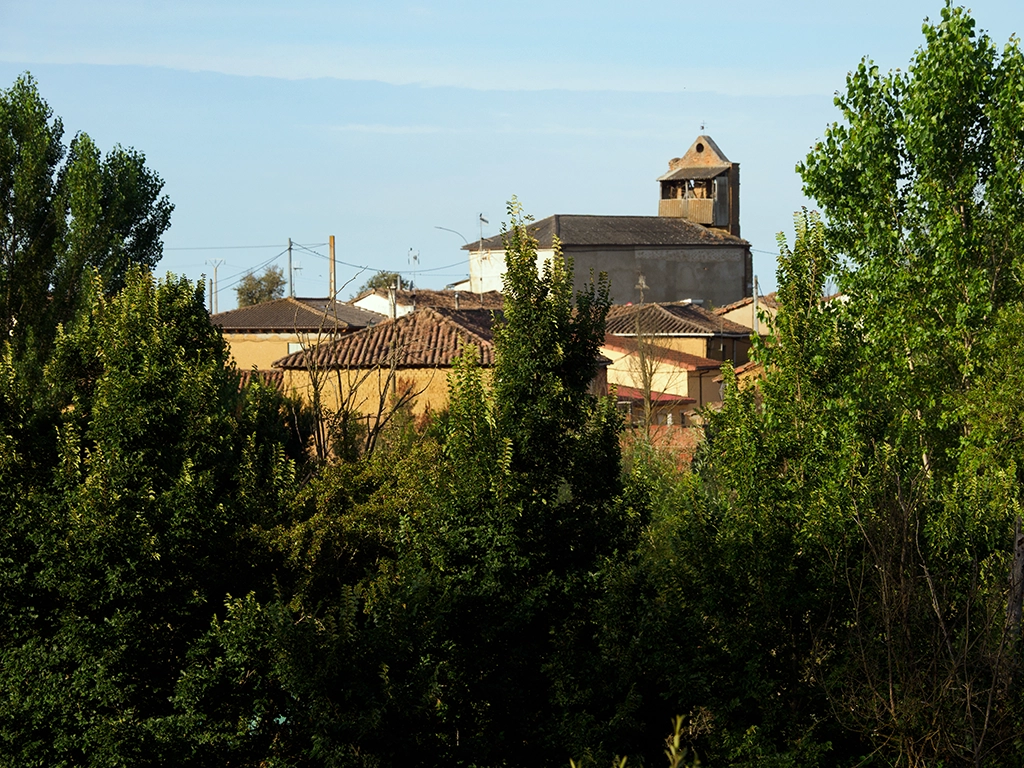
As early as the year 906, Tendal appeared in royal documents. Over the centuries, its name recurs in donations, wills, and cadastral records. In 1753, it held beehives, lambs, and an abandoned dovecote. In 1835, eighty souls, a nearby stream, and the same church that still—weathered but faithful—remains standing. Tendal does not offer itself. It endures. And in that quiet persistence lies its beauty.
As early as the year 906, Tendal appeared in royal documents. Over the centuries, its name recurs in donations, wills, and cadastral records. In 1753, it held beehives, lambs, and an abandoned dovecote. In 1835, eighty souls, a nearby stream, and the same church that still—weathered but faithful—remains standing. Tendal does not offer itself. It endures. And in that quiet persistence lies its beauty.
There are places that have never been the stage for anything memorable, but where, nonetheless, the essential happens: the act of continuing. Tendal does not rise, does not proclaim, does not dazzle. It harbors, in its own way, a tiny heroism: two villagers wounded while defending an image. And that gesture, scarcely remembered, gives meaning to everything else. Because sometimes, it is enough not to leave. To keep praying alone. To not entirely forget.

They did not save a city or a famous relic. But they bled for an image. That’s what a headstone recounts, sheltered beneath a small portico in a church roofed with corrugated sheeting, in Tendal—which is not exactly a village, but something humbler still: an inhabited fold in the moorland, a place reached not by destination, but by drift. The stone, placed there without grandeur, recalls how in 1964, two residents were injured while attempting to save the temple’s artistic heritage. No further details are given. It does not specify which artwork, nor what was spared from flames or ruin. But that nearly anonymous gesture contains—some would say—more greatness than many gilded domes. And perhaps, if one looks closely, traces of that silent effort may still be found inside the temple.
Because inside, there is wood, plaster, and dust, yes—but also memory. The central altarpiece, Baroque—or it once was—is now fatigued, weary like an old man who has lost his voice, but not his story. Within its niches dwell Saints Facundus and Primitivus, patrons of the parish, sculptures that impress not by their craftsmanship, but by their endurance: they remain there as if they knew no other purpose but to remain. Between them, at the center, the tabernacle, with a polychrome relief of Our Lady of the Rosary with the Child: not an exalted image, but a familiar one—the kind of comfort that doesn’t dazzle, but accompanies.
To its right and left, two Rococo-style tables hold two more figures. A popular depiction of the Virgin of the Rosary, with the Child on her left arm—simple, unpretentious. And a Saint Anthony with his little sow—“la gocha”—at his feet, an endearing and archaic figure, likely from the late 16th century, when art was still carved for life, not for museums.
The altar is not the only place where devotion takes shelter. To the left of the temple, affixed to the wall, there is a Christ of strange proportions, as if his body had been lengthened more by time than by chisel. His eyes, empty, do not gaze; they endure. And at the foot of the cross, a candle holder seems placed without artifice, as if someone—an elderly woman, a late-returning son—had left it there not for show, but from need. It is a domestic gesture toward the Passion, a closeness that disarms more than drama ever could.
Opposite him, Saint Blaise, in a niche on the right wall. Episcopal attributes, hand raised toward the throat, as if voicelessly reminding that he was invoked for centuries against ailments of the voice itself. It is not a remarkable sculpture, yet it lingers in the memory—perhaps for that very reason.
And then there is the sacristy, which—like every sacristy worthy of the name—safeguards what is not shown: a figure of Saint Roch, more accomplished than the others, though damaged by time, humidity, and neglect. Still, it retains that unheralded nobility possessed by figures that were once important. Perhaps it was to her—or one like her—that those two villagers sought to offer protection.
For there are those who understand that a village does not survive by its rooftops or roads, but by its gestures, by its silences, by what is still venerated even when no one remains to venerate it.
Tendal does not offer itself, nor display itself. It endures. Corrugated rooftops, images that have ceased to be art to become companionship. A place where devotions are neither spectacle nor tradition, but a way of being. Where each sculpture, each altar, each candle lit without ceremony, silently declares: we are still here. Even if no one looks anymore.
And it is not a recent whim. As early as 906, King Alfonso III and Queen Jimena mentioned Tendal among the estates donated to the Church of León. Throughout the 10th century, names like Ansur, Martino, Cipriano, Leandro, or Garsia bought or sold land and vineyards in this valley, as if sensing that the soil—though humble—held a quiet form of permanence.
In 962, a vineyard was sold “in Tendadal ad Oteriolo,” and in 1032, another near the church of Santa María—proof that even then, a temple stood in this place. Donations continued for centuries: in 1068, Eldonza and Adosinda bequeathed their estates “in territorio Legionensi, in Tendesale,” and by 1120, the Bishop of León included Tendal in the chapter’s income division, along with Villa Burgala and Villaseca.
In the 13th and 14th centuries, wills spoke of inheritances in Tendal, left to canons, chaplaincies, and perpetual anniversaries. In 1235, five donations in a single year attest to the affection for a place that seemed minor, yet returned again and again in the last wishes of the dying. In 1452, the Monastery of Sahagún still traded its possessions in Tendal with the Dean of León’s Church.
In the 1753 Ensenada Land Registry, houses, neighbors, taxes, beehives, lambs, must, and even an idle dovecote are recorded. Names are also mentioned: Blas Gutiérrez, Andrés Gutiérrez, Juana, Toribio, Simón, Roque—a family extended in variants of itself. And the essential is certified: that life was lived here, that work was done here, that prayers were spoken here.
In 1835, Madoz described the place with his usual brevity: a few dozen residents, eighty souls, wheat, rye, legumes, a nearby stream, a church dedicated to Saints Facundus and Primitivus. But he does not say what the stones know: that Tendal has survived more through its anonymous faith than its architecture.
And perhaps for that reason—because everything here has been small, discreet, resilient—when someone lit that candle beneath the elongated Christ, or when two villagers in 1964 bled for an image, the gesture held the depth of the sacred. Because what matters is not so much which image was saved, but that someone chose to save it.
There are places that have never been the stage for anything memorable, but where, nonetheless, the essential happens: the act of continuing. Tendal does not rise, does not proclaim, does not dazzle. It harbors, in its own way, a tiny heroism: two villagers wounded while defending an image. And that gesture, scarcely remembered, gives meaning to everything else. Because sometimes, it is enough not to leave. To keep praying alone. To not entirely forget.
They did not save a city or a famous relic. But they bled for an image. That’s what a headstone recounts, sheltered beneath a small portico in a church roofed with corrugated sheeting, in Tendal—which is not exactly a village, but something humbler still: an inhabited fold in the moorland, a place reached not by destination, but by drift. The stone, placed there without grandeur, recalls how in 1964, two residents were injured while attempting to save the temple’s artistic heritage. No further details are given. It does not specify which artwork, nor what was spared from flames or ruin. But that nearly anonymous gesture contains—some would say—more greatness than many gilded domes. And perhaps, if one looks closely, traces of that silent effort may still be found inside the temple.
Because inside, there is wood, plaster, and dust, yes—but also memory. The central altarpiece, Baroque—or it once was—is now fatigued, weary like an old man who has lost his voice, but not his story. Within its niches dwell Saints Facundus and Primitivus, patrons of the parish, sculptures that impress not by their craftsmanship, but by their endurance: they remain there as if they knew no other purpose but to remain. Between them, at the center, the tabernacle, with a polychrome relief of Our Lady of the Rosary with the Child: not an exalted image, but a familiar one—the kind of comfort that doesn’t dazzle, but accompanies.
To its right and left, two Rococo-style tables hold two more figures. A popular depiction of the Virgin of the Rosary, with the Child on her left arm—simple, unpretentious. And a Saint Anthony with his little sow—“la gocha”—at his feet, an endearing and archaic figure, likely from the late 16th century, when art was still carved for life, not for museums.
The altar is not the only place where devotion takes shelter. To the left of the temple, affixed to the wall, there is a Christ of strange proportions, as if his body had been lengthened more by time than by chisel. His eyes, empty, do not gaze; they endure. And at the foot of the cross, a candle holder seems placed without artifice, as if someone—an elderly woman, a late-returning son—had left it there not for show, but from need. It is a domestic gesture toward the Passion, a closeness that disarms more than drama ever could.
Opposite him, Saint Blaise, in a niche on the right wall. Episcopal attributes, hand raised toward the throat, as if voicelessly reminding that he was invoked for centuries against ailments of the voice itself. It is not a remarkable sculpture, yet it lingers in the memory—perhaps for that very reason.
And then there is the sacristy, which—like every sacristy worthy of the name—safeguards what is not shown: a figure of Saint Roch, more accomplished than the others, though damaged by time, humidity, and neglect. Still, it retains that unheralded nobility possessed by figures that were once important. Perhaps it was to her—or one like her—that those two villagers sought to offer protection.
For there are those who understand that a village does not survive by its rooftops or roads, but by its gestures, by its silences, by what is still venerated even when no one remains to venerate it.
Tendal does not offer itself, nor display itself. It endures. Corrugated rooftops, images that have ceased to be art to become companionship. A place where devotions are neither spectacle nor tradition, but a way of being. Where each sculpture, each altar, each candle lit without ceremony, silently declares: we are still here. Even if no one looks anymore.
And it is not a recent whim. As early as 906, King Alfonso III and Queen Jimena mentioned Tendal among the estates donated to the Church of León. Throughout the 10th century, names like Ansur, Martino, Cipriano, Leandro, or Garsia bought or sold land and vineyards in this valley, as if sensing that the soil—though humble—held a quiet form of permanence.
In 962, a vineyard was sold “in Tendadal ad Oteriolo,” and in 1032, another near the church of Santa María—proof that even then, a temple stood in this place. Donations continued for centuries: in 1068, Eldonza and Adosinda bequeathed their estates “in territorio Legionensi, in Tendesale,” and by 1120, the Bishop of León included Tendal in the chapter’s income division, along with Villa Burgala and Villaseca.
In the 13th and 14th centuries, wills spoke of inheritances in Tendal, left to canons, chaplaincies, and perpetual anniversaries. In 1235, five donations in a single year attest to the affection for a place that seemed minor, yet returned again and again in the last wishes of the dying. In 1452, the Monastery of Sahagún still traded its possessions in Tendal with the Dean of León’s Church.
In the 1753 Ensenada Land Registry, houses, neighbors, taxes, beehives, lambs, must, and even an idle dovecote are recorded. Names are also mentioned: Blas Gutiérrez, Andrés Gutiérrez, Juana, Toribio, Simón, Roque—a family extended in variants of itself. And the essential is certified: that life was lived here, that work was done here, that prayers were spoken here.
In 1835, Madoz described the place with his usual brevity: a few dozen residents, eighty souls, wheat, rye, legumes, a nearby stream, a church dedicated to Saints Facundus and Primitivus. But he does not say what the stones know: that Tendal has survived more through its anonymous faith than its architecture.
And perhaps for that reason—because everything here has been small, discreet, resilient—when someone lit that candle beneath the elongated Christ, or when two villagers in 1964 bled for an image, the gesture held the depth of the sacred. Because what matters is not so much which image was saved, but that someone chose to save it.

Discover Sobrarriba through an unforgettable journey through its heritage, culture and landscapes. The Sobrarriba Cultural Route offers guided tours and detailed explanations at various points of interest, combining history, architecture, traditions and nature in a unique experience.
Each route is designed to suit different types of travellers: from walkers and cyclists to those who prefer horse riding or even hot air ballooning. Join us on a journey through time and delve into the secrets of a land that has witnessed centuries of history.

Discover Sobrarriba through an unforgettable journey through its heritage, culture and landscapes. The Sobrarriba Cultural Route offers guided tours and detailed explanations at various points of interest, combining history, architecture, traditions and nature in a unique experience.
Each route is designed to suit different types of travellers: from walkers and cyclists to those who prefer horse riding or even hot air ballooning. Join us on a journey through time and delve into the secrets of a land that has witnessed centuries of history.