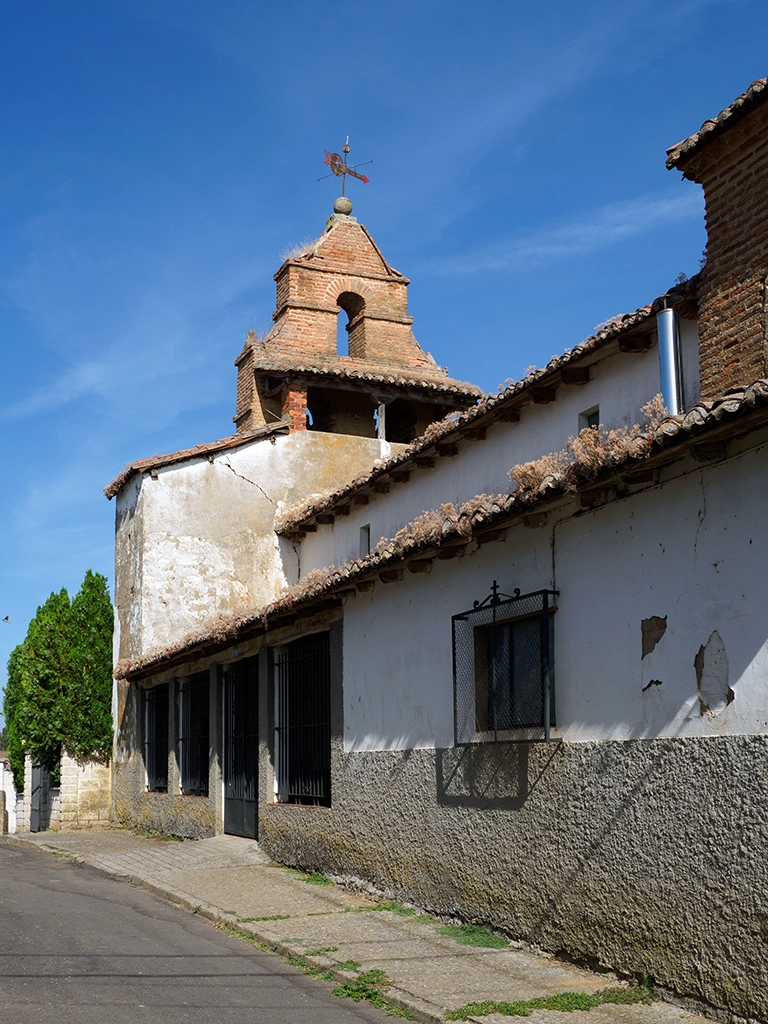
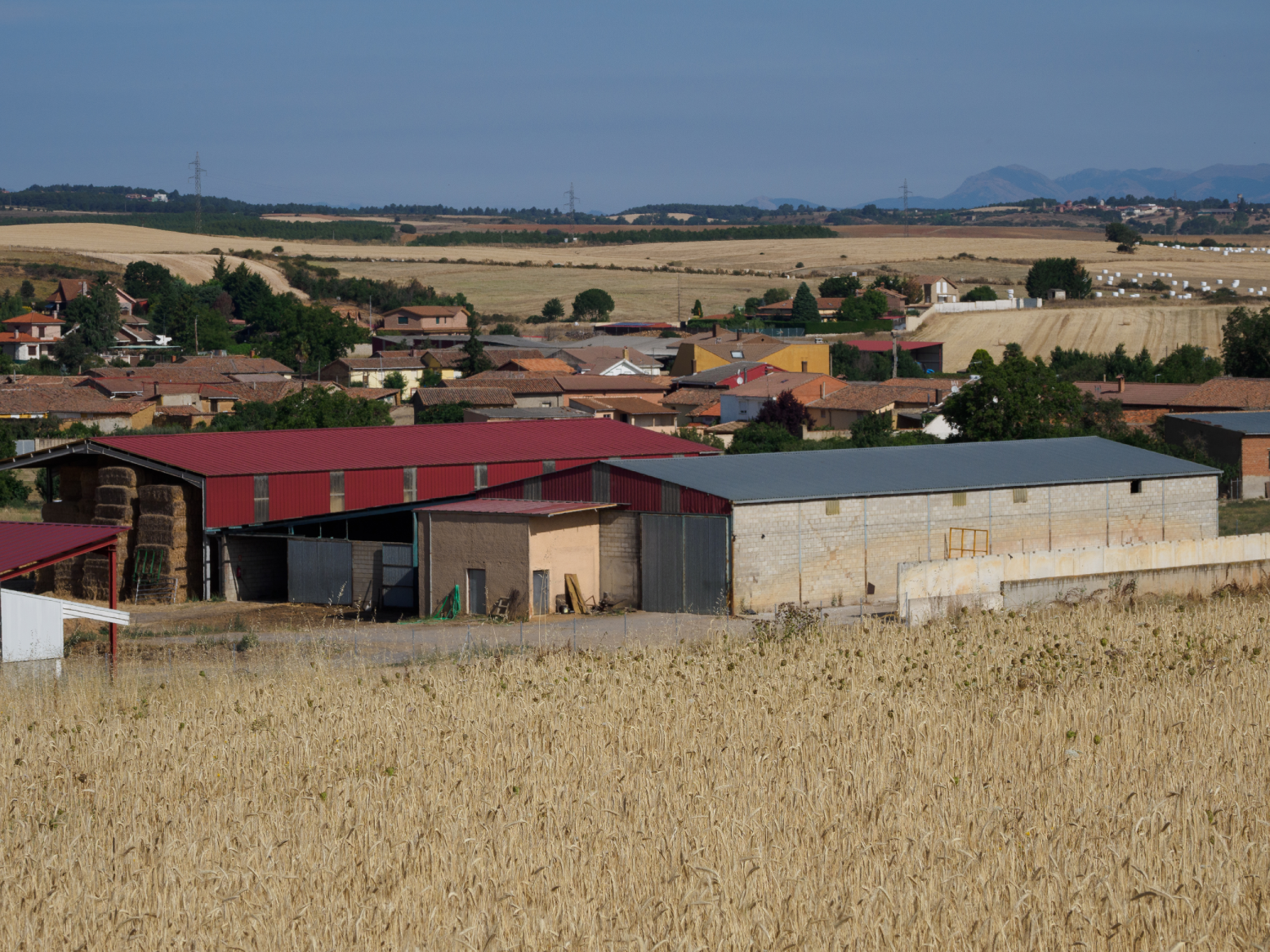
The village, with barely a dozen houses and a minimal economy, makes no claims to greatness but embodies a quiet form of resistance: that of continuing to exist without fuss, like someone who knows their worth without needing to proclaim it. A place for those who seek authenticity, stillness, and permanence.
The village, with barely a dozen houses and a minimal economy, makes no claims to greatness but embodies a quiet form of resistance: that of continuing to exist without fuss, like someone who knows their worth without needing to proclaim it. A place for those who seek authenticity, stillness, and permanence.
Sometimes what speaks most about a place is precisely what no one has bothered to fully preserve, but neither has dared to discard. Like those two panels that hang—rather float—on the side walls of the church in Sanfelismo, neither displayed nor hidden, simply there, waiting. Since when? No one knows. They are said to be Renaissance. Or at least they were, before time, humidity, insects, and a certain kind of rural neglect turned them into pictorial phantoms. One depicts a Calvary, the other an Adoration, though now their outlines are barely discernible. And yet, they remain. Persisting. Like someone forgotten, still breathing.

Those who enter the temple expecting signs of decay or withered faith are mistaken. For Sanfelismo, like so many other discreet villages scattered across this region of La Sobarriba, keeps its heritage without needing to guard it. It is not shown, nor concealed. It simply is. And to be is already a form of resistance. The presbytery houses a figure of the Savior, stern-faced, who seems not to look at the faithful but at the past. It is not a dramatic image, not even devotional in the modern sense. It is a Gothic Christ, solid in proportion, imposing not through expression but through gravity—as if he knew something he would never reveal.
To his left, a small unpolychromed Calvary still conveys—through its austerity—that essential pain, the kind that needs no color to hurt. That quiet pain which seeks not pity, but respect. Because in Sanfelismo, there are no grand declarations: everything that survives does so in a low voice.
And yet, just when you think you’ve grasped that restraint, the main altarpiece appears. Rococo in style, yes, but contained. Three panels, a single tier, a superstructure that seems to hover rather than crown. At its center, a high relief of Jesus among the doctors. A scene curiously unmiraculous, more intellectual than sacred, as though it were more a moment of conversation than revelation. On either side, Saints Justus and Pastor—boy martyrs of an unadorned faith—embody that Leonese blend of tenderness and firmness rarely found elsewhere.
But the real gem—the true treasure, if the word can be used without disturbing the tone—is tucked into a corner of the altarpiece. A Virgin of the Guide from the late 13th century, seated, with the Child resting on her left knee. Just over half a meter tall. She has been clumsily repainted, in the colors of a devotion that misunderstood art, as centuries often do. But she endures. Her face, schematic and grave, still holds a sweetness that does not seek to please, but to assist. Hers is a presence that needs no volume. A faith without emphasis.
The scene is rounded out by a Baroque Saint Anthony, looking weary from having survived so much wormwood and neglect, and a Virgin of the Rosary, sidelined—like so many presences that seem insignificant, but without which everything would collapse.
Sanfelismo—again—makes no proclamations. It has built no monuments. It has carved no legends. It has let its images, its woods, its fragments speak in its stead. And speak they do. Not of grandeur, but of permanence. Because the history of the village is not read on plaques or celebrated with anniversaries. It’s intuited in what remains. In the small carvings, the well-used tabernacles, the beehives that still yield two reales a year, the dovecotes that still produce just enough. In the names that repeat: Alonso, Gutiérrez, Fernández. In the church that shares its priest with Paradilla. In the hill that protects it without boasting.
Even in its minimal figures—the ten neighbors, the dozen houses, the loads of wheat, the oxen and donkeys—there’s a kind of balance: neither abundance nor misery, but persistence. As if here it had been understood that what matters is not being many, but lasting. And lasting without boasting.
Because there are villages that resist by making noise. And others, like Sanfelismo, that do so by remaining still.
Sometimes what speaks most about a place is precisely what no one has bothered to fully preserve, but neither has dared to discard. Like those two panels that hang—rather float—on the side walls of the church in Sanfelismo, neither displayed nor hidden, simply there, waiting. Since when? No one knows. They are said to be Renaissance. Or at least they were, before time, humidity, insects, and a certain kind of rural neglect turned them into pictorial phantoms. One depicts a Calvary, the other an Adoration, though now their outlines are barely discernible. And yet, they remain. Persisting. Like someone forgotten, still breathing.
Those who enter the temple expecting signs of decay or withered faith are mistaken. For Sanfelismo, like so many other discreet villages scattered across this region of La Sobarriba, keeps its heritage without needing to guard it. It is not shown, nor concealed. It simply is. And to be is already a form of resistance. The presbytery houses a figure of the Savior, stern-faced, who seems not to look at the faithful but at the past. It is not a dramatic image, not even devotional in the modern sense. It is a Gothic Christ, solid in proportion, imposing not through expression but through gravity—as if he knew something he would never reveal.
To his left, a small unpolychromed Calvary still conveys—through its austerity—that essential pain, the kind that needs no color to hurt. That quiet pain which seeks not pity, but respect. Because in Sanfelismo, there are no grand declarations: everything that survives does so in a low voice.
And yet, just when you think you’ve grasped that restraint, the main altarpiece appears. Rococo in style, yes, but contained. Three panels, a single tier, a superstructure that seems to hover rather than crown. At its center, a high relief of Jesus among the doctors. A scene curiously unmiraculous, more intellectual than sacred, as though it were more a moment of conversation than revelation. On either side, Saints Justus and Pastor—boy martyrs of an unadorned faith—embody that Leonese blend of tenderness and firmness rarely found elsewhere.
But the real gem—the true treasure, if the word can be used without disturbing the tone—is tucked into a corner of the altarpiece. A Virgin of the Guide from the late 13th century, seated, with the Child resting on her left knee. Just over half a meter tall. She has been clumsily repainted, in the colors of a devotion that misunderstood art, as centuries often do. But she endures. Her face, schematic and grave, still holds a sweetness that does not seek to please, but to assist. Hers is a presence that needs no volume. A faith without emphasis.
The scene is rounded out by a Baroque Saint Anthony, looking weary from having survived so much wormwood and neglect, and a Virgin of the Rosary, sidelined—like so many presences that seem insignificant, but without which everything would collapse.
Sanfelismo—again—makes no proclamations. It has built no monuments. It has carved no legends. It has let its images, its woods, its fragments speak in its stead. And speak they do. Not of grandeur, but of permanence. Because the history of the village is not read on plaques or celebrated with anniversaries. It’s intuited in what remains. In the small carvings, the well-used tabernacles, the beehives that still yield two reales a year, the dovecotes that still produce just enough. In the names that repeat: Alonso, Gutiérrez, Fernández. In the church that shares its priest with Paradilla. In the hill that protects it without boasting.
Even in its minimal figures—the ten neighbors, the dozen houses, the loads of wheat, the oxen and donkeys—there’s a kind of balance: neither abundance nor misery, but persistence. As if here it had been understood that what matters is not being many, but lasting. And lasting without boasting.
Because there are villages that resist by making noise. And others, like Sanfelismo, that do so by remaining still.

Discover Sobrarriba through an unforgettable journey through its heritage, culture and landscapes. The Sobrarriba Cultural Route offers guided tours and detailed explanations at various points of interest, combining history, architecture, traditions and nature in a unique experience.
Each route is designed to suit different types of travellers: from walkers and cyclists to those who prefer horse riding or even hot air ballooning. Join us on a journey through time and delve into the secrets of a land that has witnessed centuries of history.

Discover Sobrarriba through an unforgettable journey through its heritage, culture and landscapes. The Sobrarriba Cultural Route offers guided tours and detailed explanations at various points of interest, combining history, architecture, traditions and nature in a unique experience.
Each route is designed to suit different types of travellers: from walkers and cyclists to those who prefer horse riding or even hot air ballooning. Join us on a journey through time and delve into the secrets of a land that has witnessed centuries of history.