Documented since the year 916, Paradilla preserves ancestral toponyms and a humble yet dignified agricultural legacy. The Ensenada Cadastre (1753) already mentioned neighbors, beehives, a forge, and ancient rents. Paradilla does not boast, but it endures. Ideal for those who seek authenticity, roots, and silence filled with meaning.
Documented since the year 916, Paradilla preserves ancestral toponyms and a humble yet dignified agricultural legacy. The Ensenada Cadastre (1753) already mentioned neighbors, beehives, a forge, and ancient rents. Paradilla does not boast, but it endures. Ideal for those who seek authenticity, roots, and silence filled with meaning.
There was once an altarpiece, or so they say. The young never saw it, the old do not recall it, but someone, at some time, mentioned it, and that was enough for it to exist. It was made of painted panels, from the 15th century, with scenes of Saint Peter and the apostles, and it stood at the center of Paradilla’s church, where now there is another, Baroque and more recent, which does not offend, even pleases, but cannot replace what is missing. For not everything that is absent can be substituted, and some voids grow heavier the more one tries to cover them. The statue of Saint Peter in Chains now presiding over it—enthroned, shackled—seems to know this: he bears his chains not just as an attribute, but as a sign of waiting, as though he too awaited return to a time that vanished without farewell.

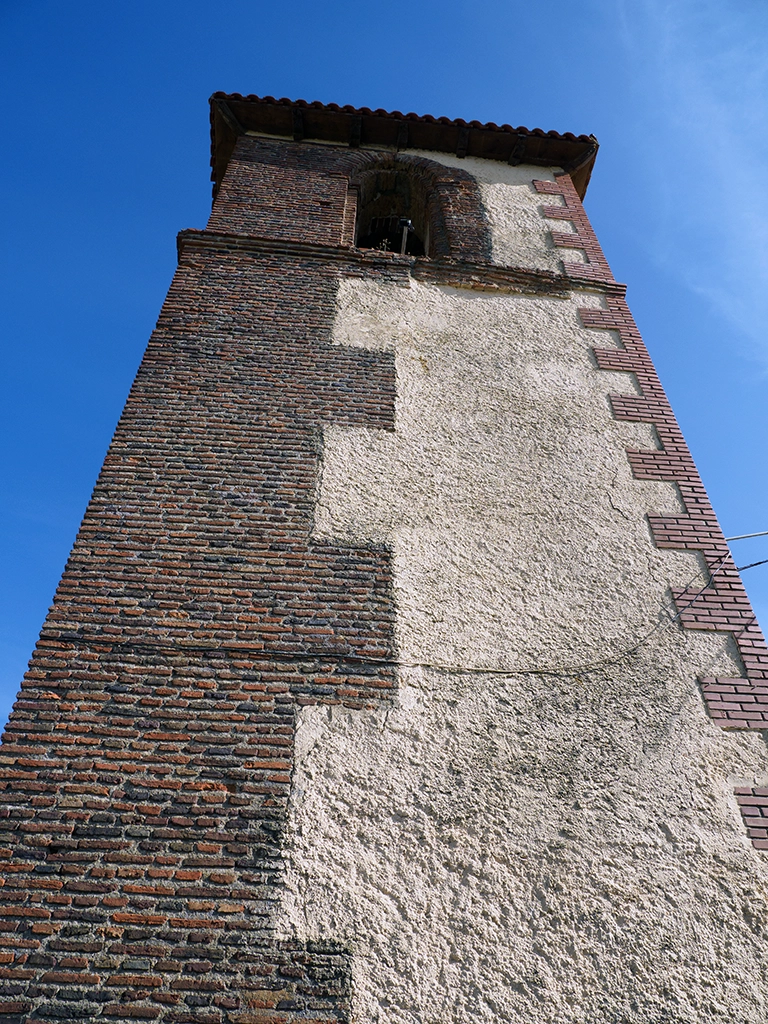
And yet, Paradilla has not wholly lost its voice. The brick tower rises apart from the nave, as if unwilling to fully belong, or needing to observe from outside. In the sacristy, there are images unlisted in inventories—and for that very reason, they move us more: a Saint Roch who truly seems to have walked the earth, a weary-looking Saint Martin, a forgotten Virgin, and a Saint Eugenia restored with the delicacy reserved for those who no longer need to impose themselves. Even a small Pietà, rough in form but fragile in expression, as if sorrow had lodged not in the face, but in the wood itself.
And then, the tabernacle. Small, discreet, with a relief of the Resurrection that seems to say: “there was more here once.” As with ruins, certain words, or the eyes of one who has already spoken the essential—it is not what they show, but what they suggest, that matters. In that small low relief may dwell everything that disappeared from the old altarpiece. Because art, like faith, does not always survive whole. Sometimes it endures in fragments. And that is enough.
But what truly sustains Paradilla is not in the altarpiece, nor in the figures, nor in the tower, but in a gesture repeated every January 31st, when winter still holds firm and the days stretch long. On that day, the Brotherhood of Saint Eugenia, one of the oldest in La Sobarriba, is reborn. It is also known as the Brotherhood of the Brown Cloaks, and its members—always men, though that too may change someday—dress with solemnity, without ostentation: white shirt, dark waistcoat, wide-brimmed hat, and that coarse wool cloak that does not dazzle but shields; that does not adorn but preserves. It is not a costume. It is a legacy.
On the eve, there are chants, and names are called, as if it were a memory’s army. The next day, after mass, the brothers process slowly, the abbots carrying their staffs, as if each step bore a history longer than themselves. Later, at the communal meal, toasts are made to the absent. They are not named, but they are present. The founders, the departed, those who no longer come. They, too, in a way, raise their glasses. Silently.
That day, and only then, everything makes sense. The parish cross, for instance, finally reveals itself. Of silver, from the 17th century, with Christ on the front and Saint Peter on the back. Twelve apostles surround it in small niches. But one is missing. That absence is not hidden. It is accepted. As absences in life are accepted. As one moves forward not despite them, but with them.
Paradilla was never large. Nor does it pretend to be. It stands there, among fields that still remember the names of the ancients: Fonte Genestales, the Valley of Sanfelismo, the Meadow of the Devesa. Documents—from as early as 916, when Ordoño II already mentioned its name—depict it as a land inherited, sold, offered, claimed, as if everyone had wanted to leave something there. The vineyards, the orchards, the pens, the pastures—all bear names. All were once important.
The Ensenada Cadastre, in 1753, noted eleven households, six widows, several loads of wheat, a forge, and a perpetual rent to the Marquis of San Vicente for a land called Villamuriel. The surnames repeat: Alonso, Flórez, Gutiérrez. Today, loads, lambs, and hens are no longer counted. But their descendants walk with the same shadow.
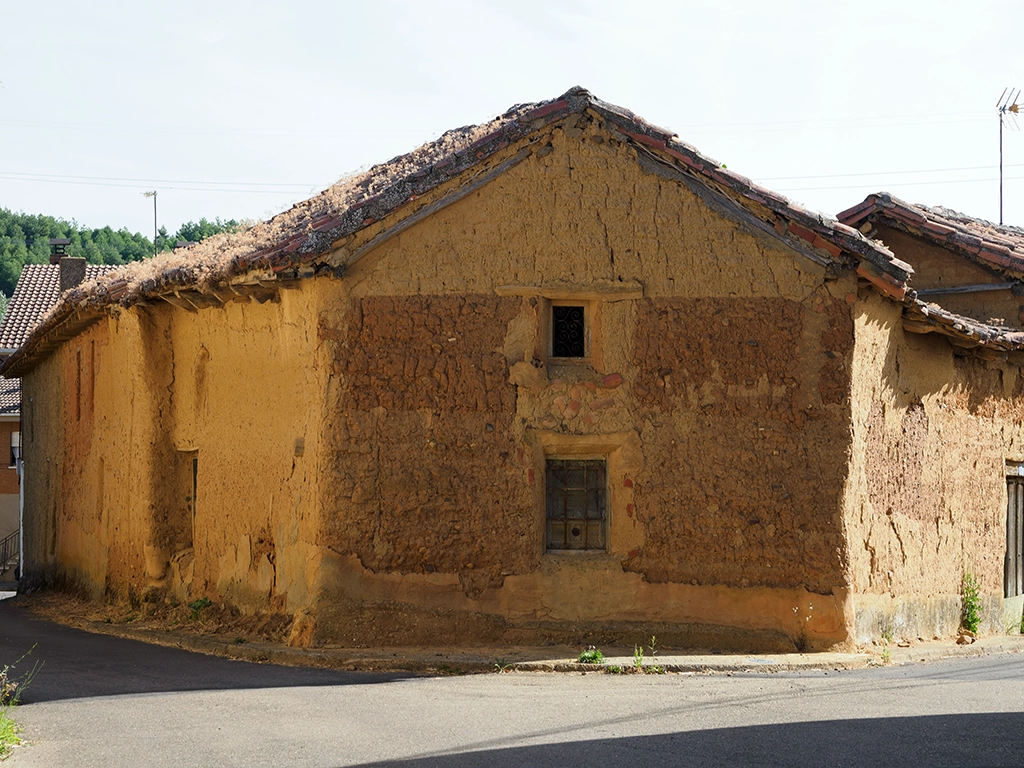
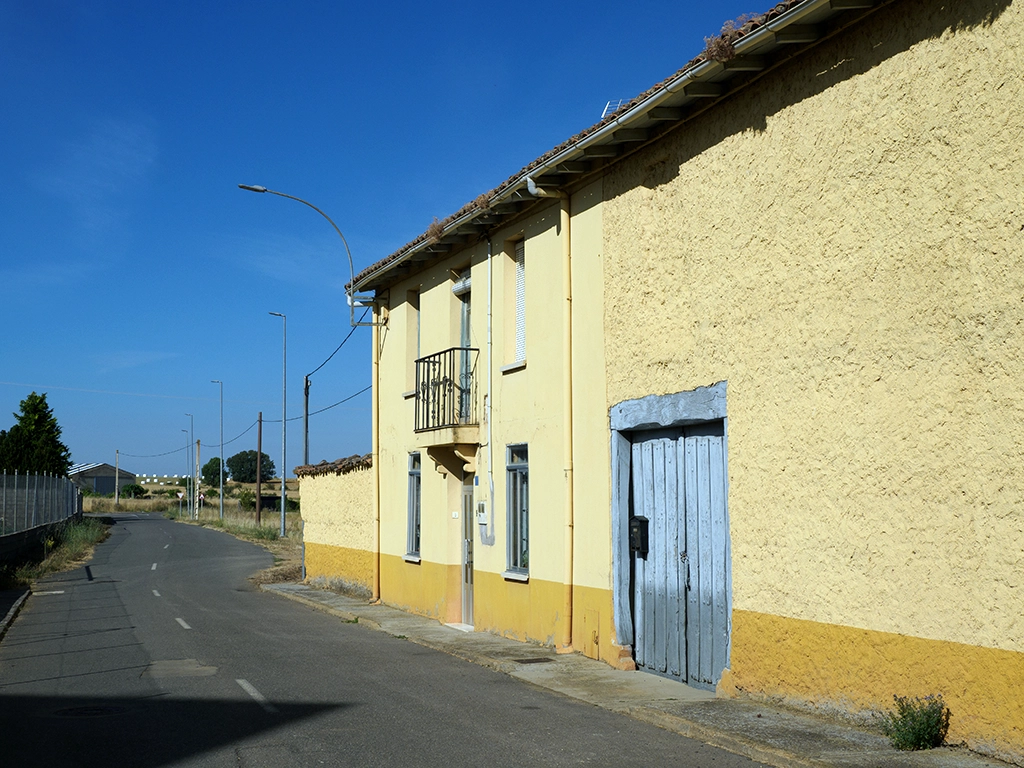
Paradilla is not frozen in time, but neither does it rush forward. It lives like those figures that do not move but still breathe. In its houses, its paths, its silences. And in the quiet certainty that some things must not be spoken to endure. It is enough to wear them once a year. It is enough to remember—without urgency—that art, like faith, like small villages, does not die when it disappears, but when we forget that it still breathes.
There was once an altarpiece, or so they say. The young never saw it, the old do not recall it, but someone, at some time, mentioned it, and that was enough for it to exist. It was made of painted panels, from the 15th century, with scenes of Saint Peter and the apostles, and it stood at the center of Paradilla’s church, where now there is another, Baroque and more recent, which does not offend, even pleases, but cannot replace what is missing. For not everything that is absent can be substituted, and some voids grow heavier the more one tries to cover them. The statue of Saint Peter in Chains now presiding over it—enthroned, shackled—seems to know this: he bears his chains not just as an attribute, but as a sign of waiting, as though he too awaited return to a time that vanished without farewell.
And yet, Paradilla has not wholly lost its voice. The brick tower rises apart from the nave, as if unwilling to fully belong, or needing to observe from outside. In the sacristy, there are images unlisted in inventories—and for that very reason, they move us more: a Saint Roch who truly seems to have walked the earth, a weary-looking Saint Martin, a forgotten Virgin, and a Saint Eugenia restored with the delicacy reserved for those who no longer need to impose themselves. Even a small Pietà, rough in form but fragile in expression, as if sorrow had lodged not in the face, but in the wood itself.
And then, the tabernacle. Small, discreet, with a relief of the Resurrection that seems to say: “there was more here once.” As with ruins, certain words, or the eyes of one who has already spoken the essential—it is not what they show, but what they suggest, that matters. In that small low relief may dwell everything that disappeared from the old altarpiece. Because art, like faith, does not always survive whole. Sometimes it endures in fragments. And that is enough.
But what truly sustains Paradilla is not in the altarpiece, nor in the figures, nor in the tower, but in a gesture repeated every January 31st, when winter still holds firm and the days stretch long. On that day, the Brotherhood of Saint Eugenia, one of the oldest in La Sobarriba, is reborn. It is also known as the Brotherhood of the Brown Cloaks, and its members—always men, though that too may change someday—dress with solemnity, without ostentation: white shirt, dark waistcoat, wide-brimmed hat, and that coarse wool cloak that does not dazzle but shields; that does not adorn but preserves. It is not a costume. It is a legacy.
On the eve, there are chants, and names are called, as if it were a memory’s army. The next day, after mass, the brothers process slowly, the abbots carrying their staffs, as if each step bore a history longer than themselves. Later, at the communal meal, toasts are made to the absent. They are not named, but they are present. The founders, the departed, those who no longer come. They, too, in a way, raise their glasses. Silently.
That day, and only then, everything makes sense. The parish cross, for instance, finally reveals itself. Of silver, from the 17th century, with Christ on the front and Saint Peter on the back. Twelve apostles surround it in small niches. But one is missing. That absence is not hidden. It is accepted. As absences in life are accepted. As one moves forward not despite them, but with them.
Paradilla was never large. Nor does it pretend to be. It stands there, among fields that still remember the names of the ancients: Fonte Genestales, the Valley of Sanfelismo, the Meadow of the Devesa. Documents—from as early as 916, when Ordoño II already mentioned its name—depict it as a land inherited, sold, offered, claimed, as if everyone had wanted to leave something there. The vineyards, the orchards, the pens, the pastures—all bear names. All were once important.
The Ensenada Cadastre, in 1753, noted eleven households, six widows, several loads of wheat, a forge, and a perpetual rent to the Marquis of San Vicente for a land called Villamuriel. The surnames repeat: Alonso, Flórez, Gutiérrez. Today, loads, lambs, and hens are no longer counted. But their descendants walk with the same shadow.
Paradilla is not frozen in time, but neither does it rush forward. It lives like those figures that do not move but still breathe. In its houses, its paths, its silences. And in the quiet certainty that some things must not be spoken to endure. It is enough to wear them once a year. It is enough to remember—without urgency—that art, like faith, like small villages, does not die when it disappears, but when we forget that it still breathes.

Discover Sobrarriba through an unforgettable journey through its heritage, culture and landscapes. The Sobrarriba Cultural Route offers guided tours and detailed explanations at various points of interest, combining history, architecture, traditions and nature in a unique experience.
Each route is designed to suit different types of travellers: from walkers and cyclists to those who prefer horse riding or even hot air ballooning. Join us on a journey through time and delve into the secrets of a land that has witnessed centuries of history.

Discover Sobrarriba through an unforgettable journey through its heritage, culture and landscapes. The Sobrarriba Cultural Route offers guided tours and detailed explanations at various points of interest, combining history, architecture, traditions and nature in a unique experience.
Each route is designed to suit different types of travellers: from walkers and cyclists to those who prefer horse riding or even hot air ballooning. Join us on a journey through time and delve into the secrets of a land that has witnessed centuries of history.