
Type of route: Closed circular
Approximate distance: 8–10 km
Difficulty: Low
Estimated duration: 2–2.5 hours on foot
Main appeal: Scenic and artistic
Start and finish: Carbajosa
Type of route: Closed circular
Approximate distance: 8–10 km
Difficulty: Low
Estimated duration: 2–2.5 hours on foot
Main appeal: Scenic and artistic
Start and finish: Carbajosa
A tranquil journey among centuries-old churches, fountains, and viewpoints. This route offers insight into the heart of La Sobarriba through its rural architecture, expansive vistas, and the living memory of its villages. Ideal for families, cyclists, and leisurely walkers.

Route A begins and ends in Carbajosa de la Sobarriba, a village that retains the serenity of places that have withstood time without losing their essence. From the centrally located parish church, whose bell gable rises like a serene beacon over the surrounding plain, this circular route invites us to walk through the geographic and symbolic heart of La Sobarriba.
The church features a simple yet significant structure, comprising a single rectangular nave and an elevated square apse, separated by a high semicircular arch. The side entrance is through a covered atrium, and adjacent to the temple stands a stone bell gable with an external staircase, added later. Since the late 20th century, the church has undergone successive restorations: from the recovery of the Mudejar coffered ceiling and the tabernacle to the progressive restoration of the altarpiece and the renovation of the roof, which was rebuilt in 2024 after its collapse. During this last intervention, hidden frescoes were discovered above the apse arch, though they are now covered by a false wooden ceiling.
The apse is notable for its splendid 16th-century Mudejar coffered ceiling, featuring geometric decoration and a central angel figure retaining its polychromy. The supporting pendentives were once adorned with representations of the evangelists, now safeguarded. The apse includes a restored stained-glass window and access to the sacristy. In the central nave, a valuable 14th-century Gothic sculpture of the crucified Christ, serene and expressive in style, is preserved. Also noteworthy is the former presence of the Virgin of Carbajosa, a 12th-century Romanesque sculpture now housed in the León Cathedral museum, and a baptismal font altered in function but still appreciable in its original design.
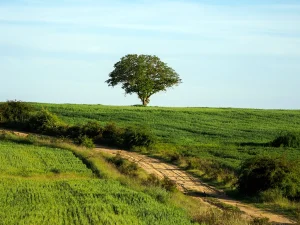
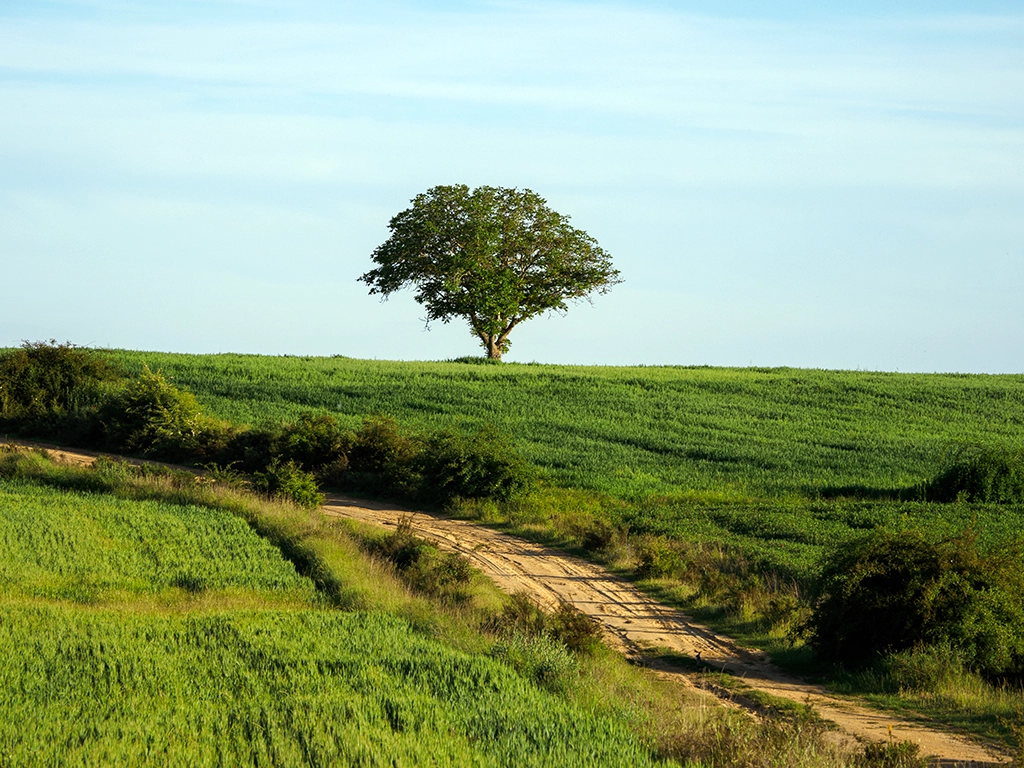
From the square surrounding the church, all the village’s streets originate, and for this route, the path begins by ascending a dirt track that winds between farmland, oak bushes, and remnants of native vegetation, crossing the road to reach the hilltop (cueto or ário) where an old hermitage once stood, now vanished. In its memory, a grand iron cross and a stone altar rise, dominating the fields beside the cemetery and the impressive viewpoint.
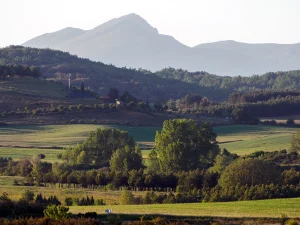
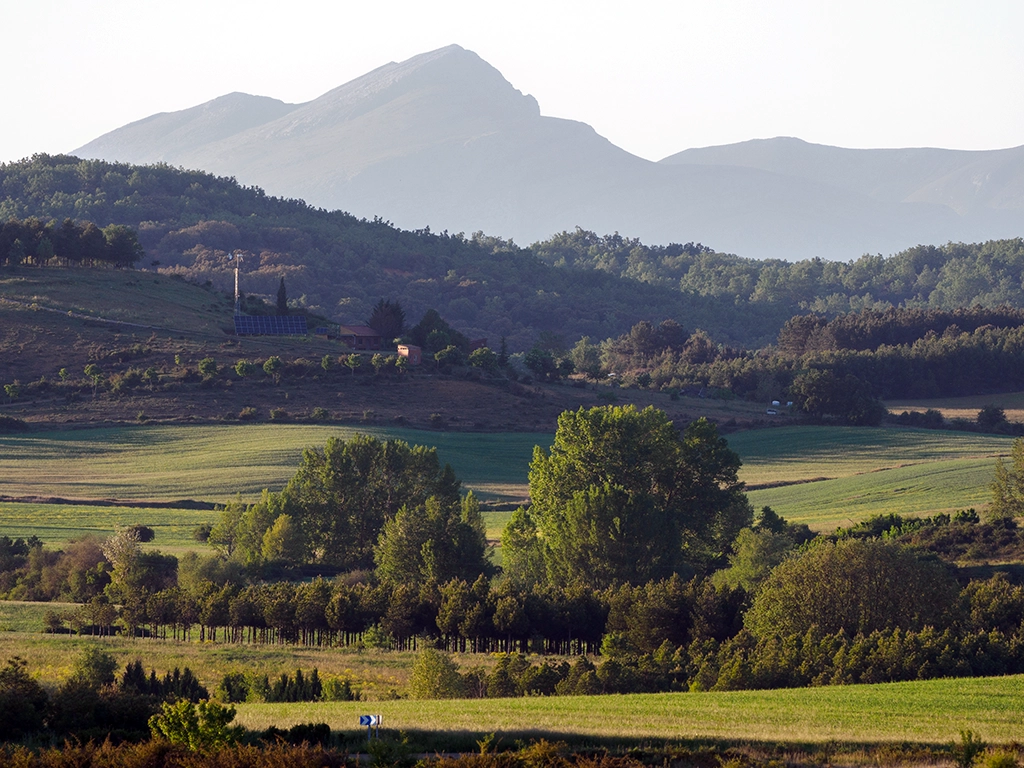
From the village’s upper part, the path gently ascends along a dirt track that meanders through farmland, holm oak bushes, and remnants of native vegetation. Soon, the route reaches the hilltop of the former hermitage, of which no visible remains exist. The viewpoint offers an extensive, unobstructed panorama, where cultivated fields succeed one another, and in the distance, the rooftops of neighbouring villages can be discerned.
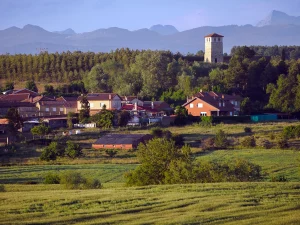
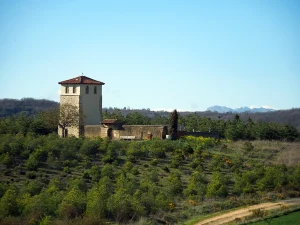
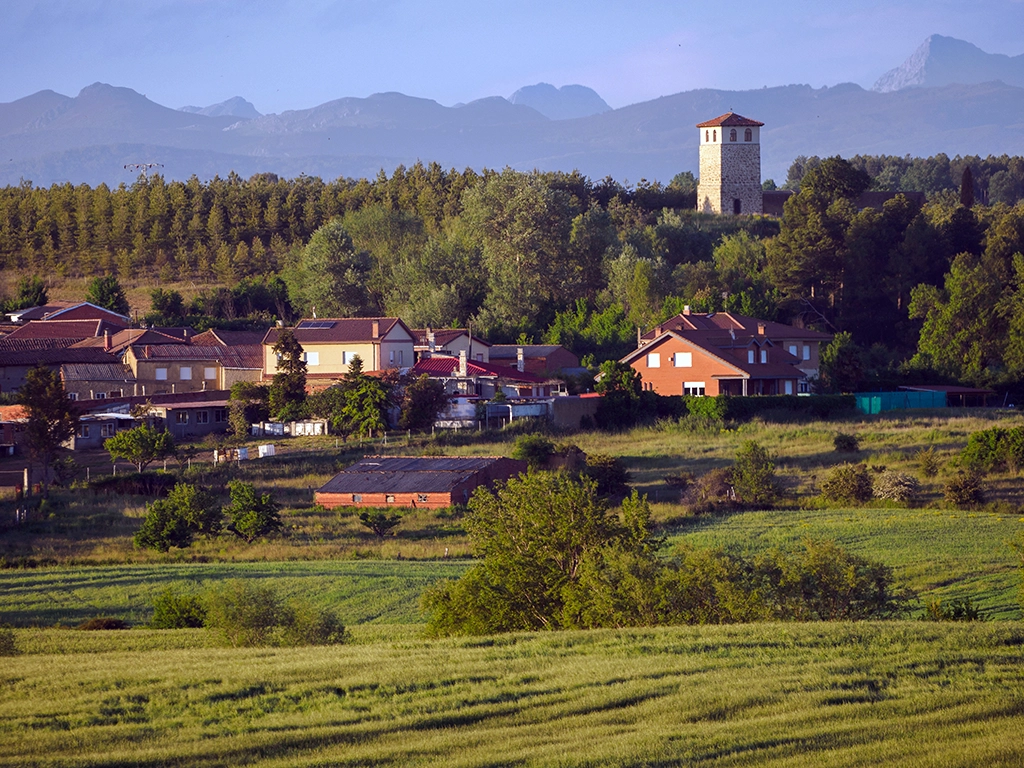
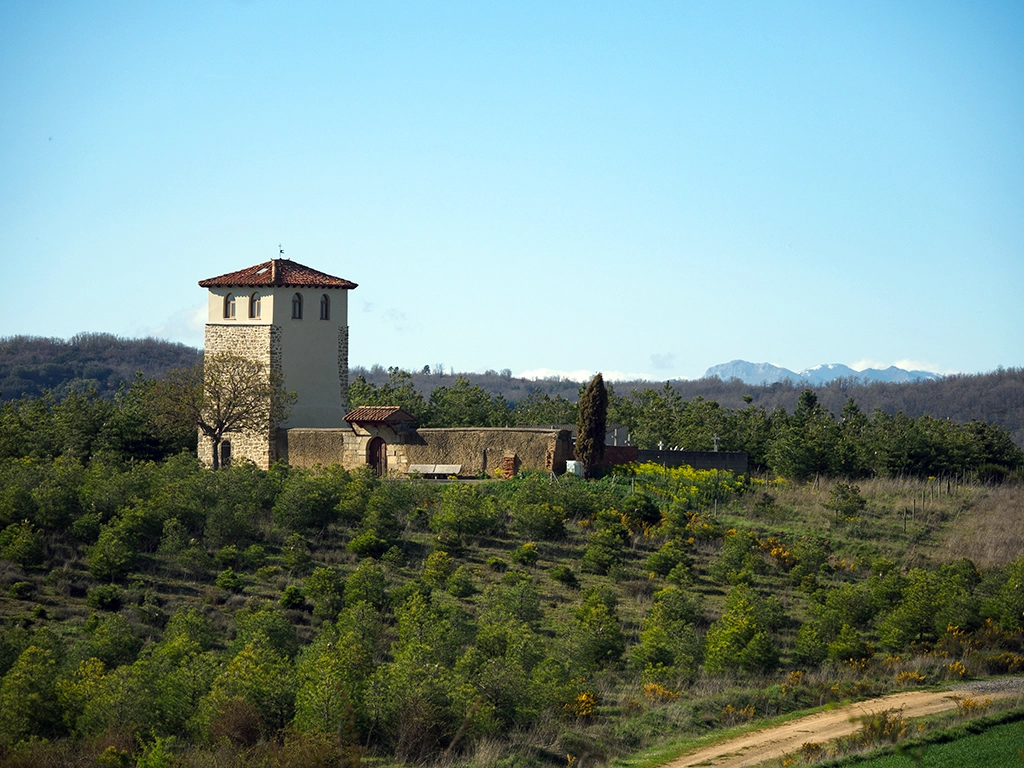
The path descends through pine groves and crops towards a small stretch of rural road. Emerging among brambles is the Villalboñe Tower, the only remaining part of its old parish church, to which this building was attached. Its origins likely trace back to a medieval watchtower or possibly even Roman times. It is a square-plan construction with three distinct sections: the two lower ones made of carefully carved stone blocks, and the upper one of exposed brick, resulting from a later intervention. Thanks to recent restoration, the tower retains a severe, almost monastic nobility, serving as a vertical symbol of the place’s memory. From the upper floor, the windows open towards the four cardinal points, allowing views of the surrounding region, encompassing cultivated fields, meadows, hills, slopes, woodland, and small groves. On clear days, keen eyes might even glimpse the Roman ruins of the city of Lancia in the distance.
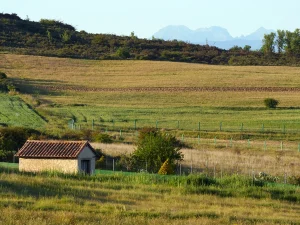
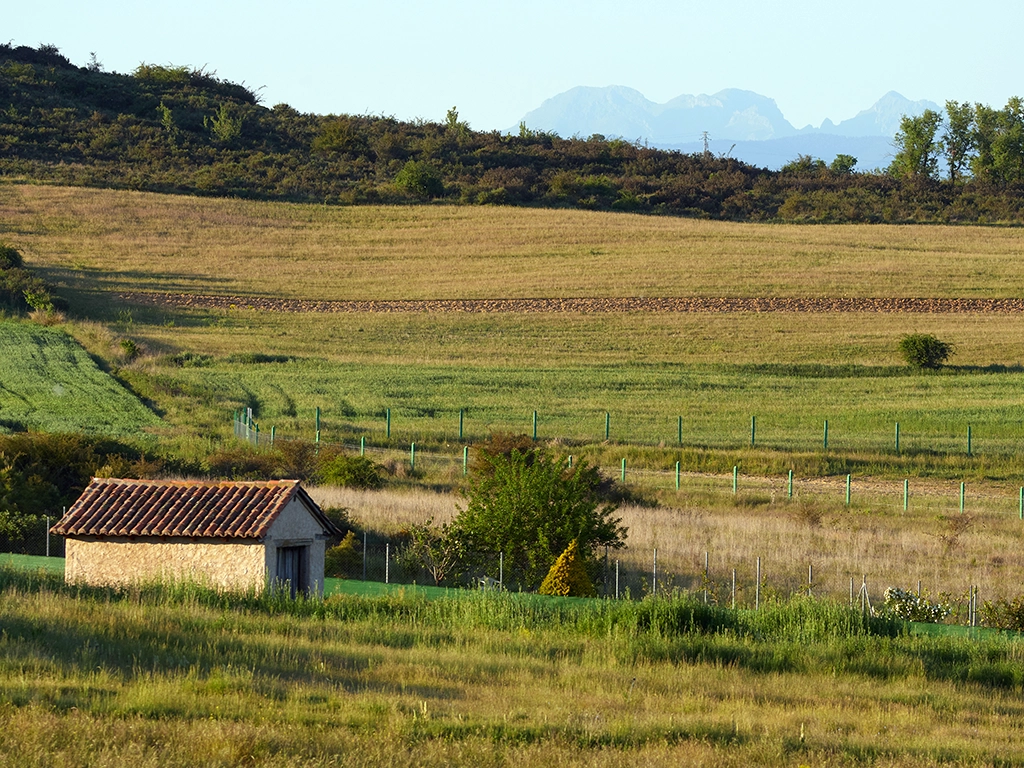
From there, the route continues along agricultural paths towards Solanilla. Along these segments, scattered along the path’s edges, are tool sheds—humble constructions that, despite their purely practical function, possess an austere dignity integral to La Sobarriba’s traditional landscape. Their architecture reflects rural ingenuity.
Solanilla nestles among the surrounding hills. Its small, cosy church sits atop a rise, featuring a bell gable and cemetery. The temple, dedicated to Saint Stephen, retains part of its original structure. According to records from the Diocesan Archive of León, Solanilla has had a parish church since 1516, indicating that the community had its own temple at least since the 16th century. The current church, though it may have undergone modifications over time, maintains elements reflecting its historical origin and significance in the village’s religious life. Stone and brick coexist here with a modest portal, where simplicity does not preclude a certain geometric elegance. It’s a good spot to pause and observe how the terrain softens the plain. From here, paths branch out towards Villafeliz and Villacil.
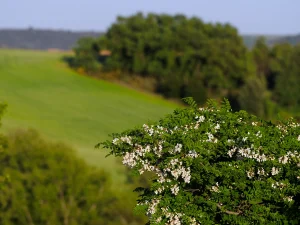
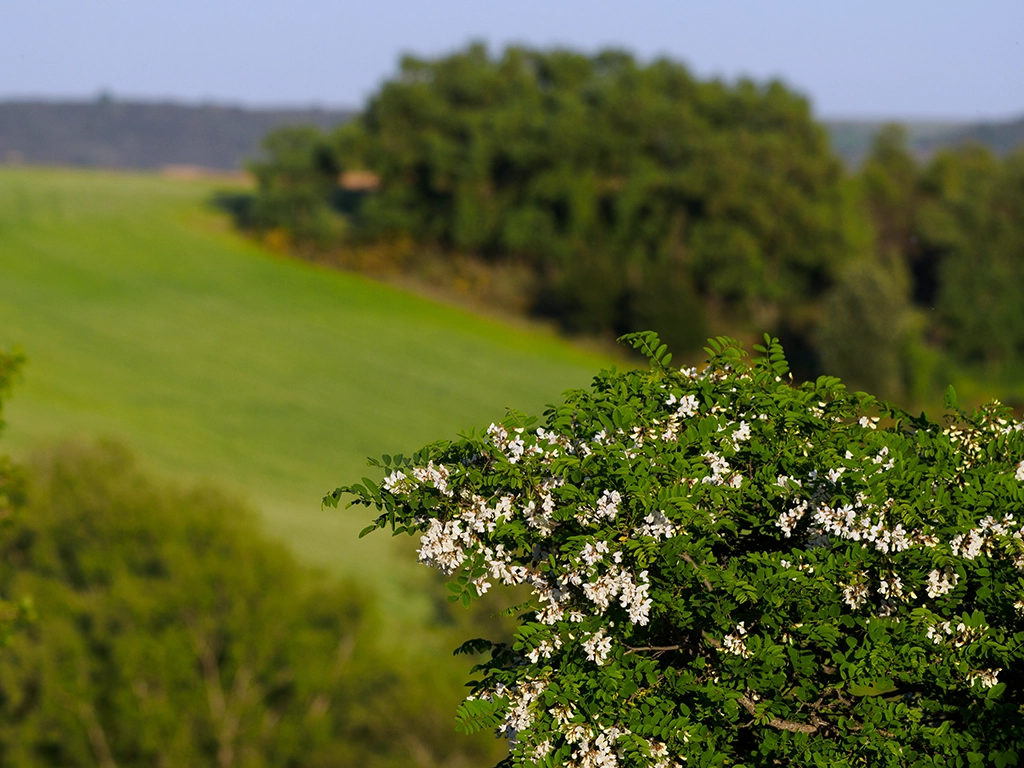
The next segment descends into the La Nava valley, an old livestock route where remnants of a domesticated nature still survive: broom shrubs, scattered holm oaks, cereal fields, and mown meadows. In spring, this natural corridor bursts into colour with poppies, clovers, chamomiles, and mallows, while partridges, roe deer, or kites may be spotted circling overhead.
Upon reaching the junction with the secondary road, the route ascends a final stretch connecting to the upper part of Carbajosa. From there, the return is filled with nostalgia: the Church of the Assumption re-emerges above the rooftops, surrounded by meadows. It’s the final image of a walk that has also been a return—to origins, to the landscape, and to memory.
Route Segments:
Recommendations:
Route Segments:
Recommendations:

Discover Sobrarriba through an unforgettable journey through its heritage, culture and landscapes. The Sobrarriba Cultural Route offers guided tours and detailed explanations at various points of interest, combining history, architecture, traditions and nature in a unique experience.
Each route is designed to suit different types of travellers: from walkers and cyclists to those who prefer horse riding or even hot air ballooning. Join us on a journey through time and delve into the secrets of a land that has witnessed centuries of history.

Discover Sobrarriba through an unforgettable journey through its heritage, culture and landscapes. The Sobrarriba Cultural Route offers guided tours and detailed explanations at various points of interest, combining history, architecture, traditions and nature in a unique experience.
Each route is designed to suit different types of travellers: from walkers and cyclists to those who prefer horse riding or even hot air ballooning. Join us on a journey through time and delve into the secrets of a land that has witnessed centuries of history.