Mentioned since 1084, Villalboñe appears in medieval documents, royal donations, and wills. The Cadastre of the Marqués de la Ensenada and Madoz both record its rural life: blacksmiths, day laborers, beehives, springs. Few houses, few words, but one constant: continuing to exist.
Mentioned since 1084, Villalboñe appears in medieval documents, royal donations, and wills. The Cadastre of the Marqués de la Ensenada and Madoz both record its rural life: blacksmiths, day laborers, beehives, springs. Few houses, few words, but one constant: continuing to exist.
You arrive, look around, and understand—without needing explanation—that Villalboñe has made no mistake in letting certain things crumble. The old church, for instance, is no longer whole, nor close, nor alive. It stands—or rather collapses—some four hundred meters from the village, as if it had never truly wanted to be at the center, as if it had always known its destiny was to become a ruin rather than a refuge. The adobe nave, beaten by rain and seasons, has given way without a sound. Only the tower remains—not proudly, but with a dignity that requires no witnesses: a square floorplan, three levels—the first two in stone, the last in brick.

For centuries, the tower stood unnoticed, just part of the horizon. Already in 1084, a document mentions the place: “between Coviellas and Villalboñe,” as if it existed only through its neighbors. But it existed. And when, in 1152, Alfonso VIII granted these lands to Pelayo Tabladelo, and Fernando II confirmed the donation around 1200, he was acknowledging a settlement already established between the Porma and the Torío, where life was woven without haste. Even in 1235, when a morabetino was paid for a plot of land and when Didacus Martini and Doña Marina Fernandi bequeathed their possessions, Villalboñe was already a name that left a trace in writing.
For years, no one looked at it twice. And yet, in 2022, someone—perhaps more faithful to time than to utility—decided to restore it, at least in part. It was the Local Council, with help from the Valdefresno Town Hall and the León Institute of Culture, who took the first step. Not to return it to what it was, but to ensure it wouldn’t cease to be entirely. So that at least the tower—that finger raised toward a sky that no longer answers—would not disappear without leaving a mark.
Down below, closer to everyday life, stands the new church, built in the 1970s. It shelters the bells from the old temple, some salvaged timbers, and little else. It has no memorable altarpieces, no images that speak. It is functional, honest, without visible soul. As if it calmly accepts that the spirit of the place stayed up there, among the fallen stones, among the crumbled walls that still gaze outward.
And between the tower and the present, older than all that, more faithful even than worship, stands the Roman fountain. Built without a signature, without glory, it still flows with water as it always has. It was never a monument. It was and remains a necessity—and that is what saved it. It is perhaps the oldest witness of what this place has been: a community that never needed ornamentation, because it understood how to endure. A village that knew legacy lies not in what is seen, but in what still works.
Time has not entirely erased it. In 1277, María Fernández, wife of a knight of Sanabria, still bequeathed her land in Villalboñe to Santa María de Regla, as if it were important to place it in good hands. In the 1753–1754 Cadastre of the Marqués de la Ensenada, Villalboñe is listed as a royal holding of León, exempt from certain taxes, with fifteen residents and a master blacksmith, Manuel Fuertes, who earned his keep between the forge and the fields. Beehives, day wages, lambs, and even utensils were valued with precision—but the fountain—the one that could not be taxed—was already there. Just as it is now.
In 1835, according to Madoz, the village had 22 houses and 140 souls. It had a school, three good fountains, and a cold but healthy climate. It produced grain, legumes, and some fruit, raised livestock, and had modest but reliable roads connecting it to Represa, Villafeliz, and Carbajosa, as if to say: we are far, but not isolated.
Such is Villalboñe: it does not shield itself from forgetting with plaques or speeches. It lets things speak, even when they can no longer stand. And while the tower points without faith to the sky, and the new church does what it can, the fountain continues to give water, as if not a single day had passed.
You arrive, look around, and understand—without needing explanation—that Villalboñe has made no mistake in letting certain things crumble. The old church, for instance, is no longer whole, nor close, nor alive. It stands—or rather collapses—some four hundred meters from the village, as if it had never truly wanted to be at the center, as if it had always known its destiny was to become a ruin rather than a refuge. The adobe nave, beaten by rain and seasons, has given way without a sound. Only the tower remains—not proudly, but with a dignity that requires no witnesses: a square floorplan, three levels—the first two in stone, the last in brick.
For centuries, the tower stood unnoticed, just part of the horizon. Already in 1084, a document mentions the place: “between Coviellas and Villalboñe,” as if it existed only through its neighbors. But it existed. And when, in 1152, Alfonso VIII granted these lands to Pelayo Tabladelo, and Fernando II confirmed the donation around 1200, he was acknowledging a settlement already established between the Porma and the Torío, where life was woven without haste. Even in 1235, when a morabetino was paid for a plot of land and when Didacus Martini and Doña Marina Fernandi bequeathed their possessions, Villalboñe was already a name that left a trace in writing.
For years, no one looked at it twice. And yet, in 2022, someone—perhaps more faithful to time than to utility—decided to restore it, at least in part. It was the Local Council, with help from the Valdefresno Town Hall and the León Institute of Culture, who took the first step. Not to return it to what it was, but to ensure it wouldn’t cease to be entirely. So that at least the tower—that finger raised toward a sky that no longer answers—would not disappear without leaving a mark.
Down below, closer to everyday life, stands the new church, built in the 1970s. It shelters the bells from the old temple, some salvaged timbers, and little else. It has no memorable altarpieces, no images that speak. It is functional, honest, without visible soul. As if it calmly accepts that the spirit of the place stayed up there, among the fallen stones, among the crumbled walls that still gaze outward.
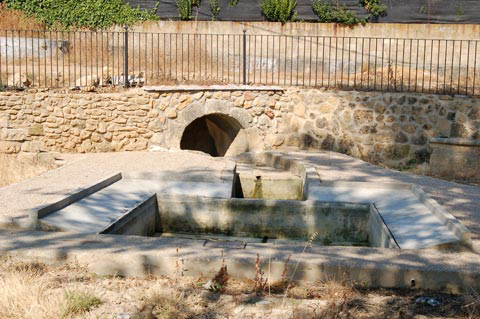
And between the tower and the present, older than all that, more faithful even than worship, stands the Roman fountain. Built without a signature, without glory, it still flows with water as it always has. It was never a monument. It was and remains a necessity—and that is what saved it. It is perhaps the oldest witness of what this place has been: a community that never needed ornamentation, because it understood how to endure. A village that knew legacy lies not in what is seen, but in what still works.
Time has not entirely erased it. In 1277, María Fernández, wife of a knight of Sanabria, still bequeathed her land in Villalboñe to Santa María de Regla, as if it were important to place it in good hands. In the 1753–1754 Cadastre of the Marqués de la Ensenada, Villalboñe is listed as a royal holding of León, exempt from certain taxes, with fifteen residents and a master blacksmith, Manuel Fuertes, who earned his keep between the forge and the fields. Beehives, day wages, lambs, and even utensils were valued with precision—but the fountain—the one that could not be taxed—was already there. Just as it is now.
In 1835, according to Madoz, the village had 22 houses and 140 souls. It had a school, three good fountains, and a cold but healthy climate. It produced grain, legumes, and some fruit, raised livestock, and had modest but reliable roads connecting it to Represa, Villafeliz, and Carbajosa, as if to say: we are far, but not isolated.
Such is Villalboñe: it does not shield itself from forgetting with plaques or speeches. It lets things speak, even when they can no longer stand. And while the tower points without faith to the sky, and the new church does what it can, the fountain continues to give water, as if not a single day had passed.

Discover Sobrarriba through an unforgettable journey through its heritage, culture and landscapes. The Sobrarriba Cultural Route offers guided tours and detailed explanations at various points of interest, combining history, architecture, traditions and nature in a unique experience.
Each route is designed to suit different types of travellers: from walkers and cyclists to those who prefer horse riding or even hot air ballooning. Join us on a journey through time and delve into the secrets of a land that has witnessed centuries of history.

Discover Sobrarriba through an unforgettable journey through its heritage, culture and landscapes. The Sobrarriba Cultural Route offers guided tours and detailed explanations at various points of interest, combining history, architecture, traditions and nature in a unique experience.
Each route is designed to suit different types of travellers: from walkers and cyclists to those who prefer horse riding or even hot air ballooning. Join us on a journey through time and delve into the secrets of a land that has witnessed centuries of history.